
Carved Details Across Interior Products
From feature walls and screens to decorative furniture fronts
In the product references we review, carved details appear in three places. They draw the eye to a wall, let light through a screen and give a piece of everyday furniture a distinctive front.
A tall storage cabinet and a low chest of drawers can share the same fine grooves running down their fronts. A buyer choosing a bedroom range can use that shared detail to link pieces that differ in height, width and finish.
Wall features
01 · Carved panels as wall features
Run a carved pattern across several panels and a whole wall starts to read as one surface. The two room studies below show how the same geometric motif can frame a family dining area or extend along the tables in a restaurant.
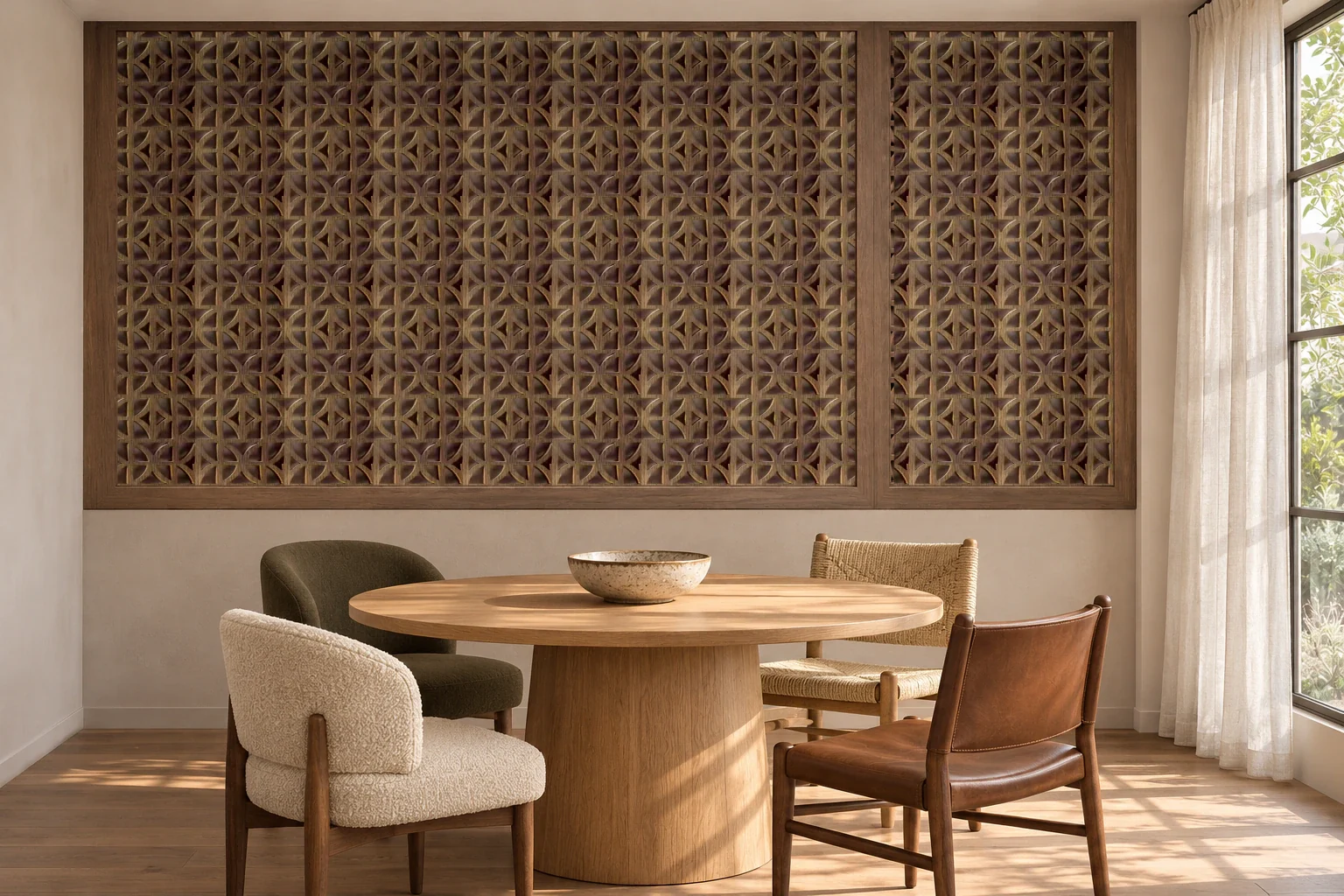
At home
Beside a window, the carved panels frame the round table as a dining area of its own. Daylight catches the face of the wood and leaves the openings in shadow. At home, the same treatment could also frame a sofa or a headboard.
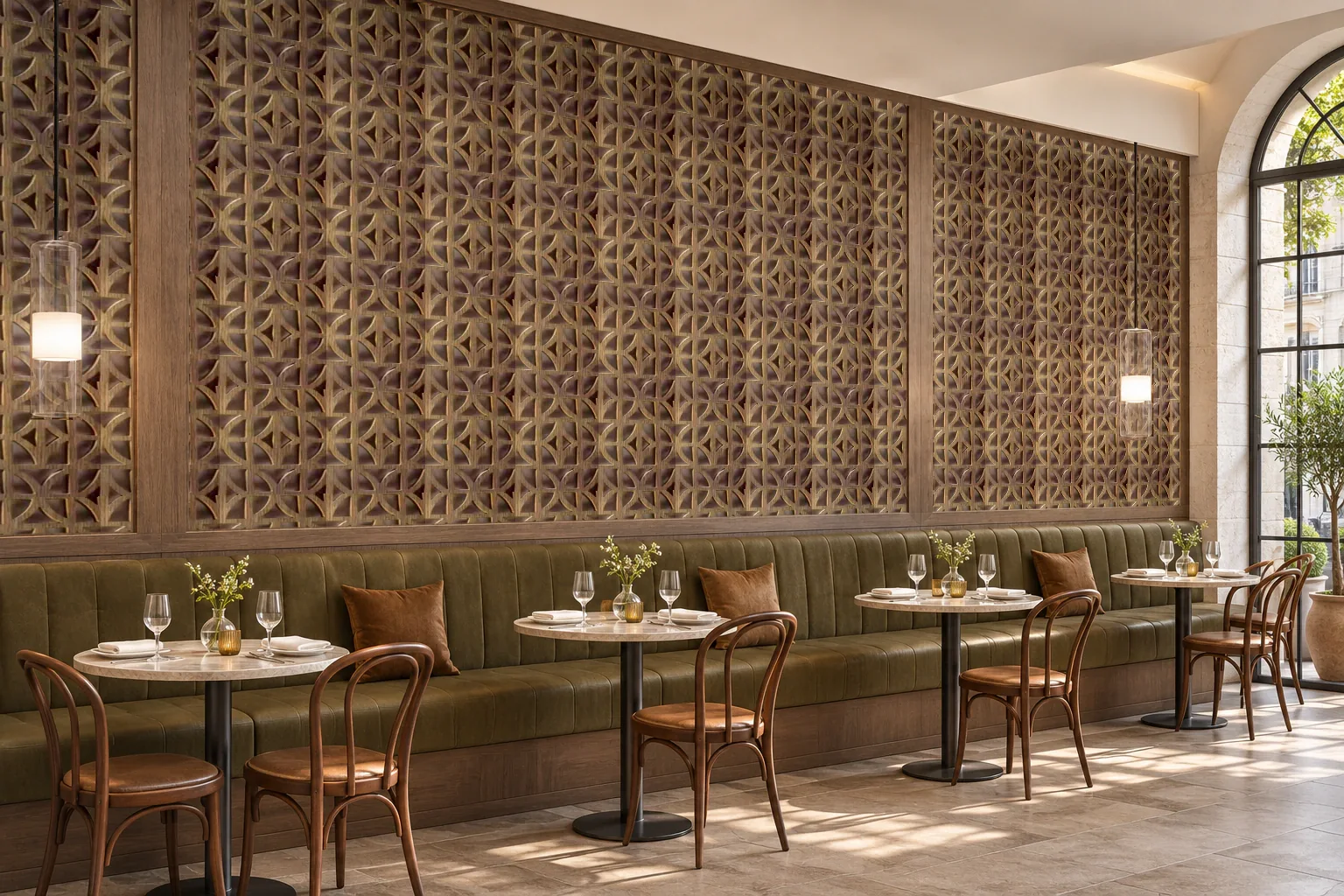
In a restaurant
A continuous run of panels follows the banquette, giving each table a backdrop of its own. From the entrance, diners see the rhythm of the whole wall. From their seats, they can see the individual curves and openings.
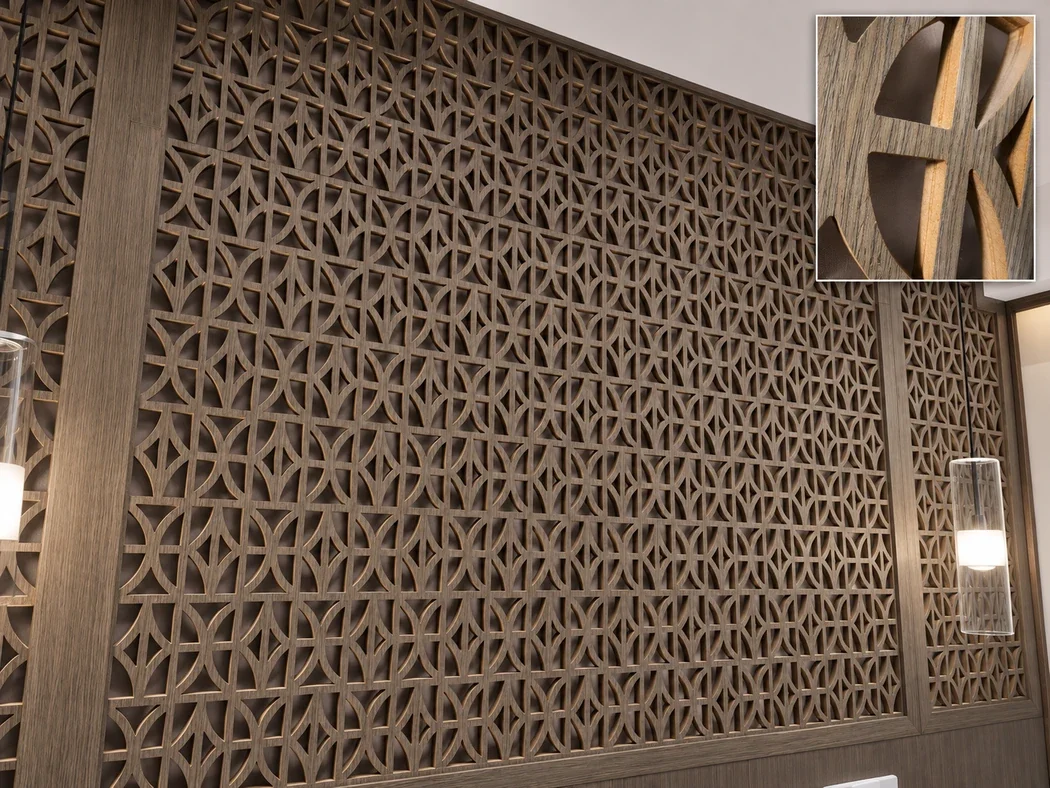
Choosing a pattern for the wall
The curved geometric repeat shown in both rooms is one of many patterns available for a feature wall. A larger, more open motif is easier to read from the other side of a restaurant. A fine lattice puts more detail at eye level beside a sofa or dining chair. The colour behind the openings also matters. A contrasting backing outlines each cut, while a similar tone softens the pattern.
When discussing another pattern, send a reference, the wall dimensions and a photo of the seating layout. These help us judge the scale of the repeat and where the panel joins will fall.
Screens
02 · Carved screens for dividing spaces
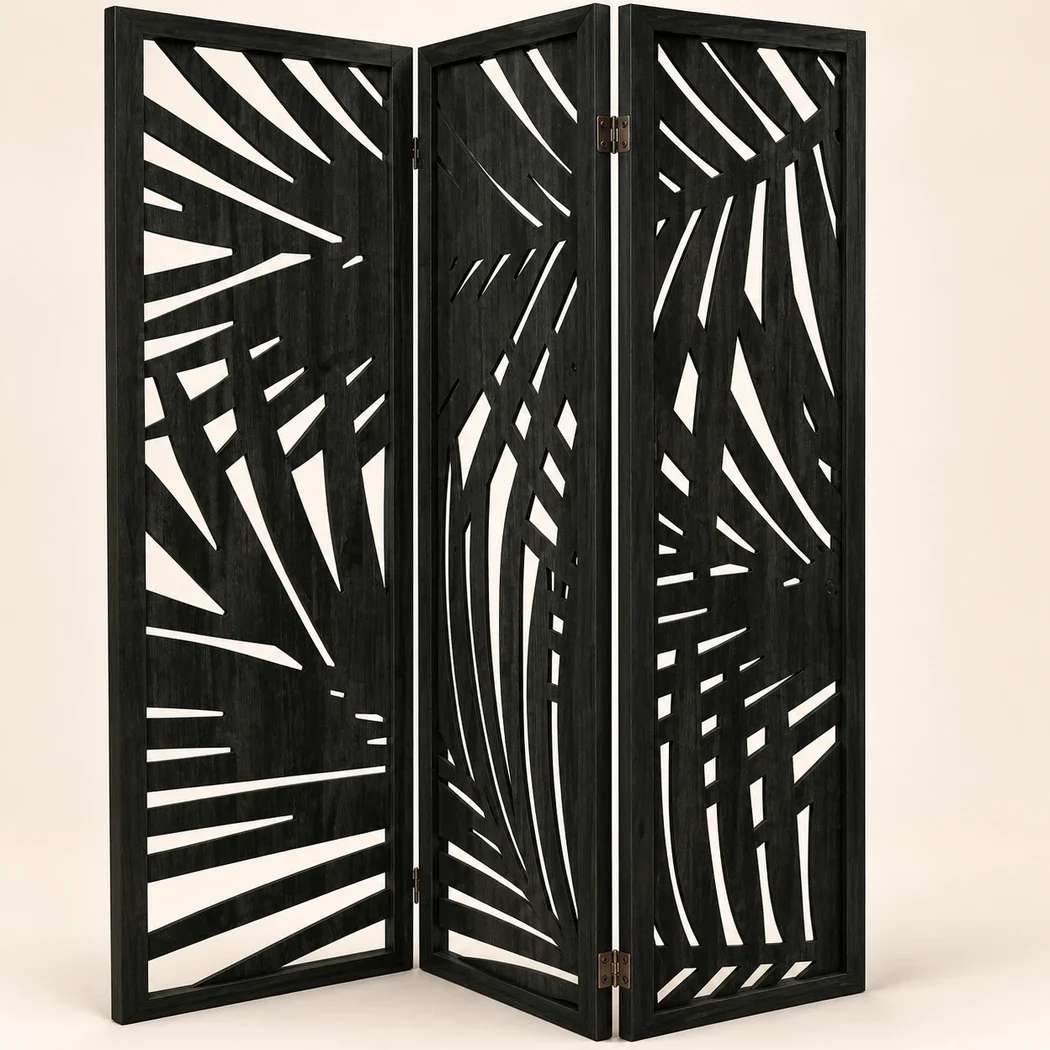
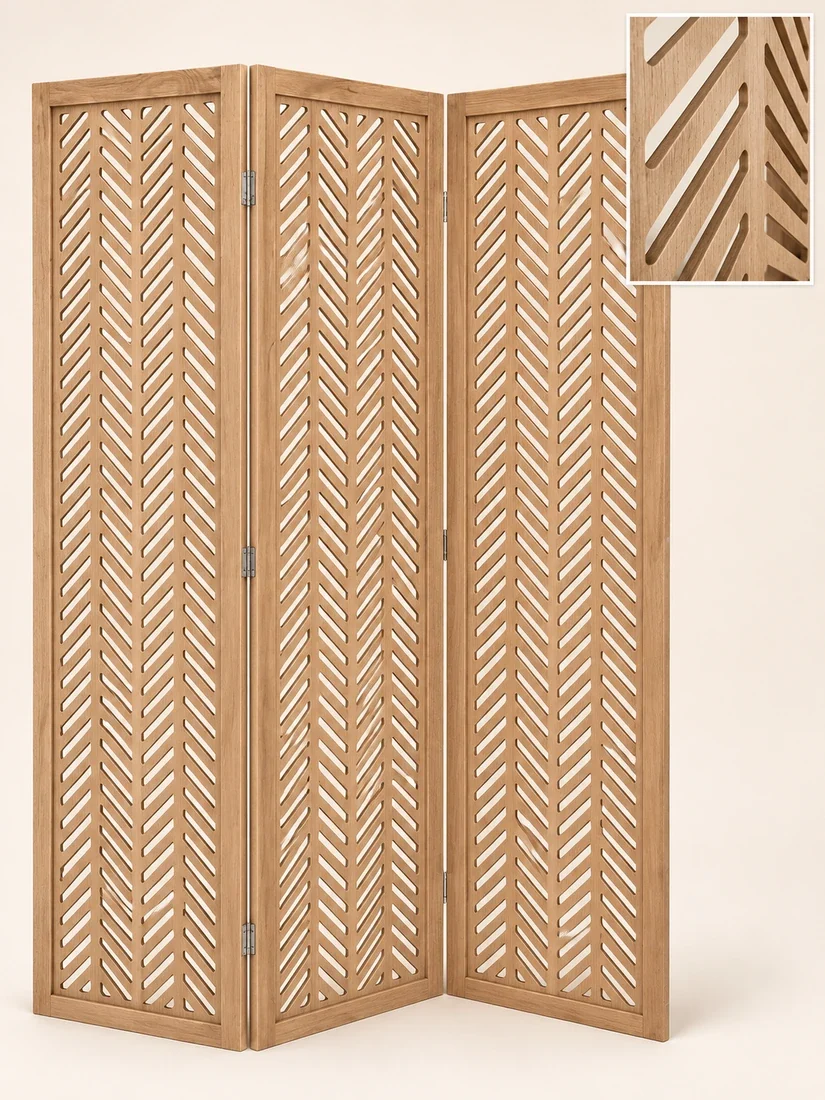
A folding screen can mark the edge of a seating area and still let daylight through. These two three-panel designs show how much the shape and spacing of the cuts affect the view through the screen.
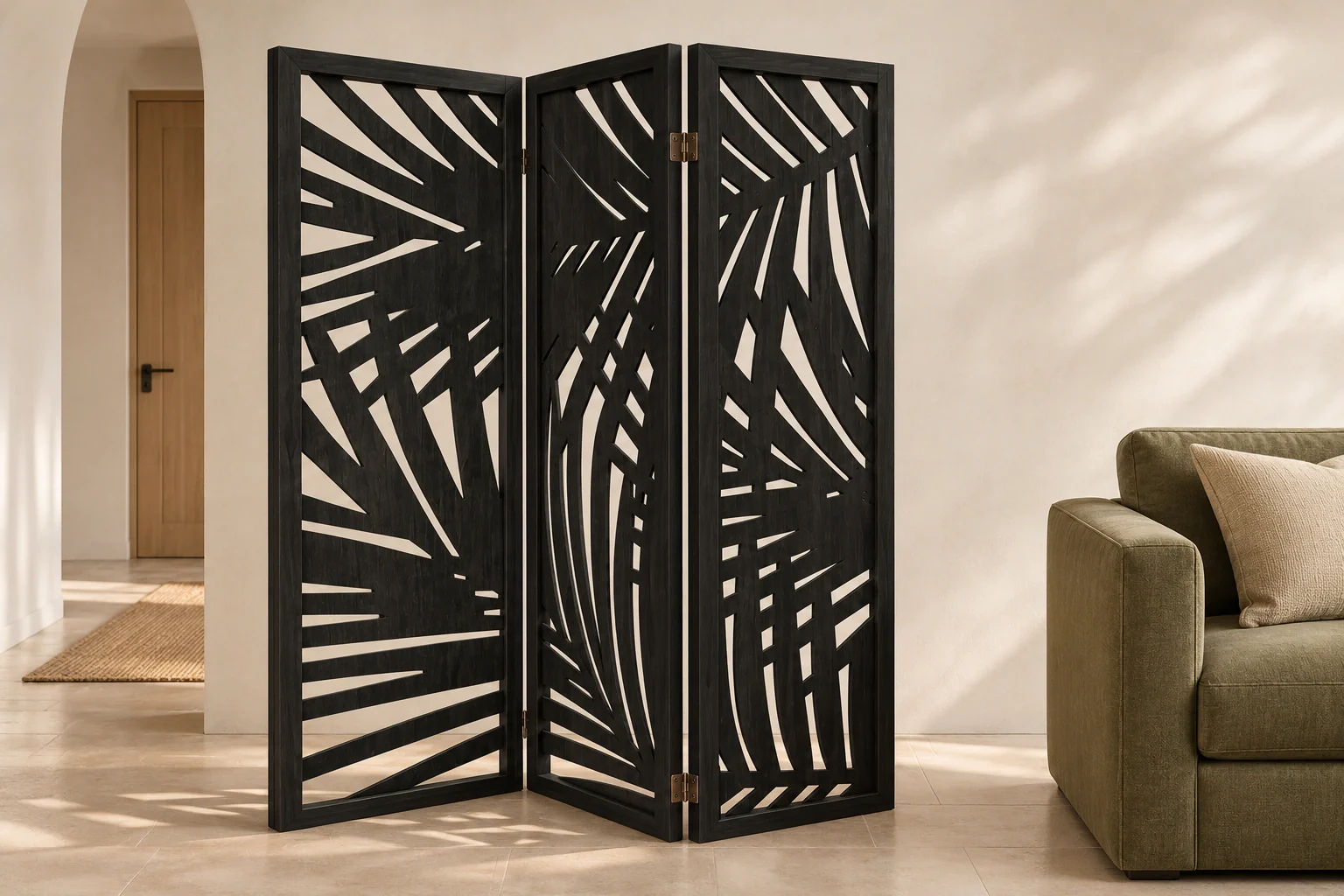
Black leaf-cut screen
The dark frame gives the divider a clear outline. Set between the entrance and the sofa, the screen gives the sitting area a boundary. Broad, tapering openings still allow a glimpse of the room from the entry.
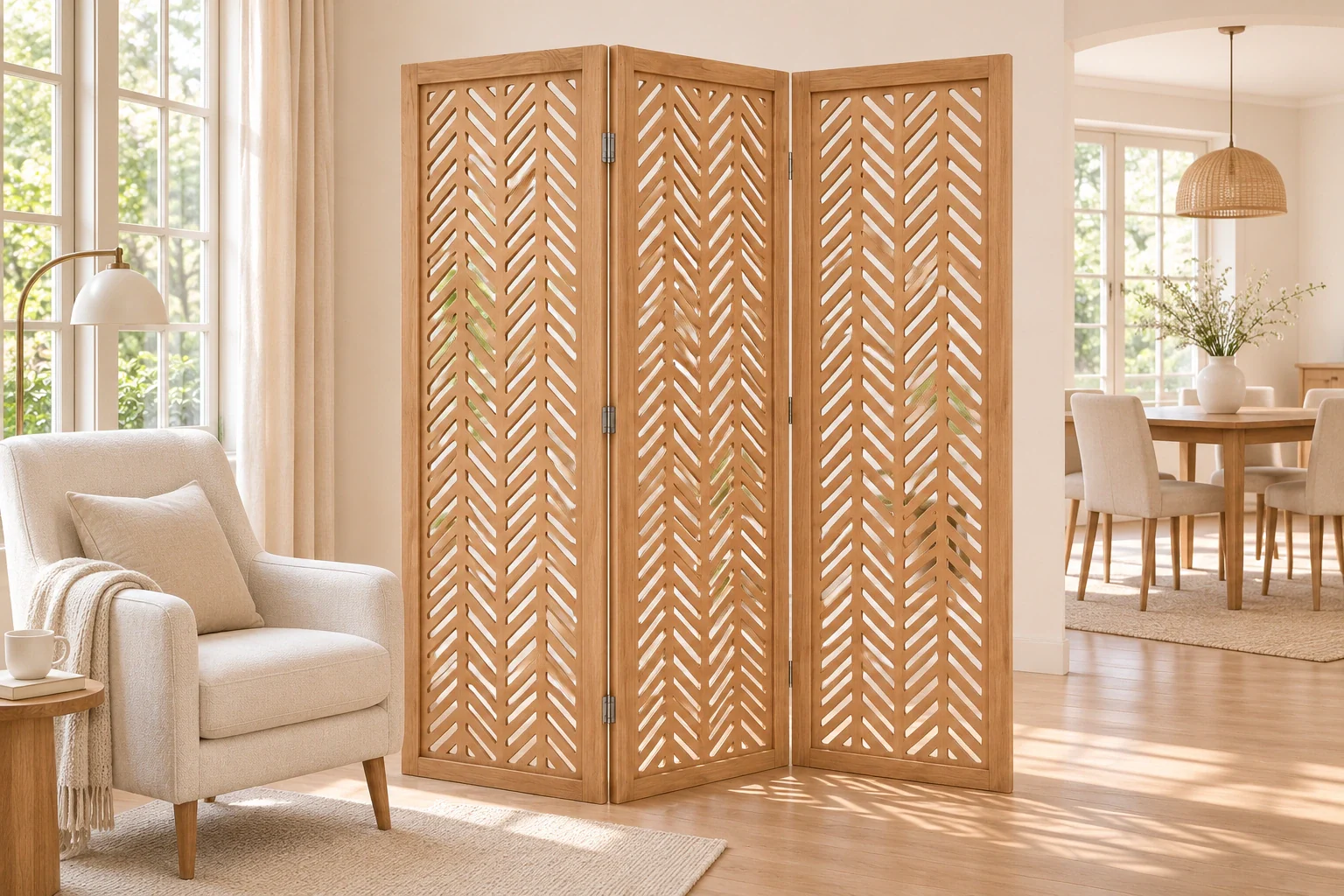
Wood-tone chevron screen
Beside the reading chair, the three wood-tone leaves form a shallow zigzag. Their closely spaced diagonal cuts soften the view of the dining table beyond, while daylight still reaches the chair.
Furniture fronts
03 · Carved details on functional furniture
Look across an everyday furniture range and carved details turn up on a cupboard door, the front of a bedroom drawer and the cover around a radiator. How much of the front carries the pattern makes as much difference as the pattern itself.
Cabinet doors and furniture fronts
On a kitchen cupboard or a bedroom cabinet, a cut around the centre of the door can give the whole piece its character. Many shaped MDF fronts use vacuum-formed PVC foil, which follows the cut into the recess.
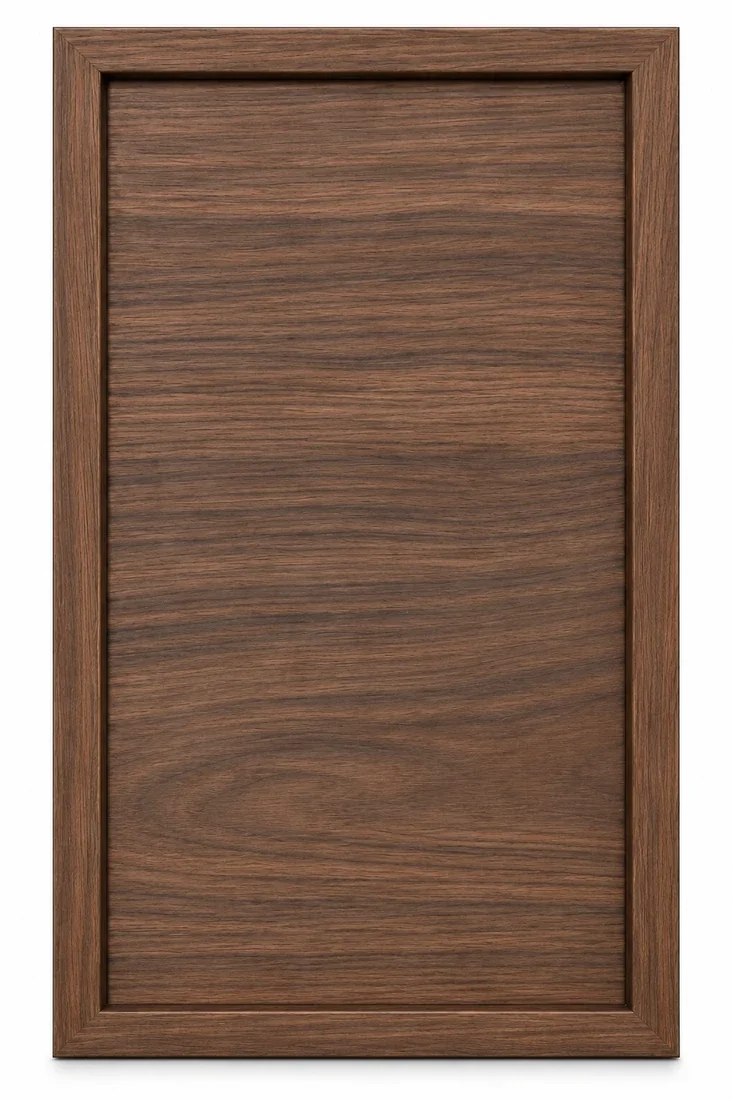
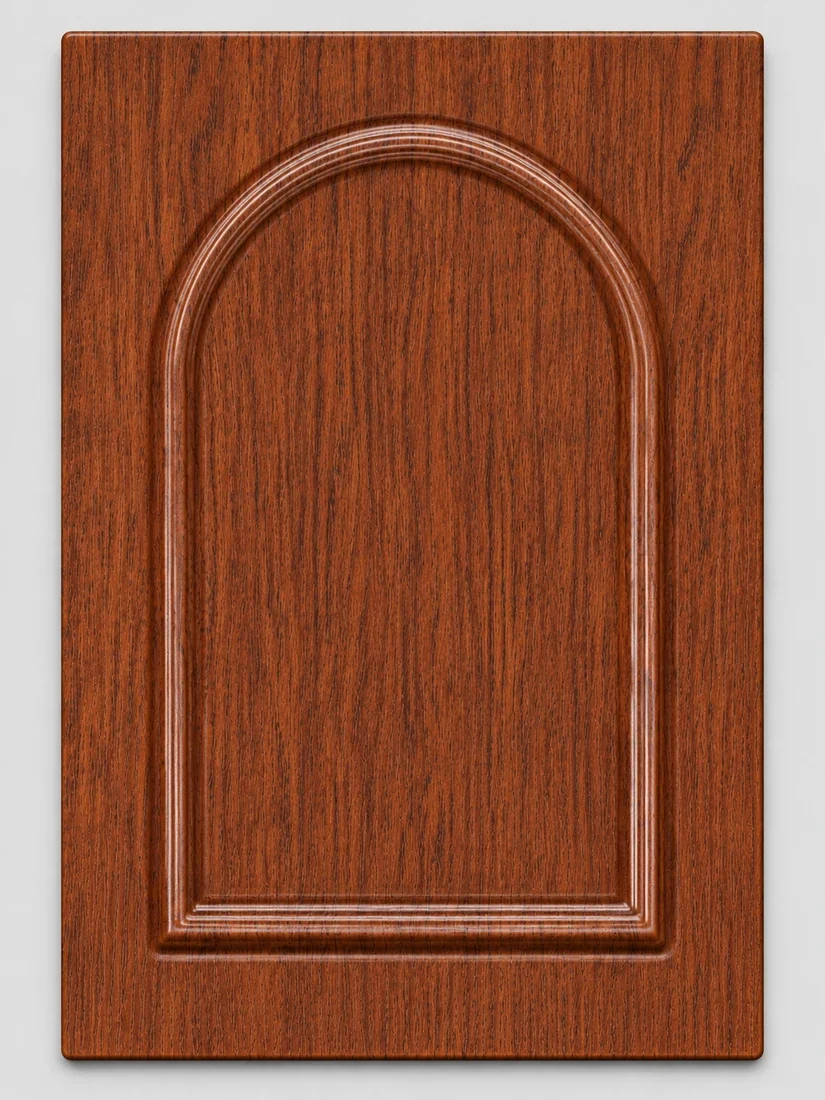
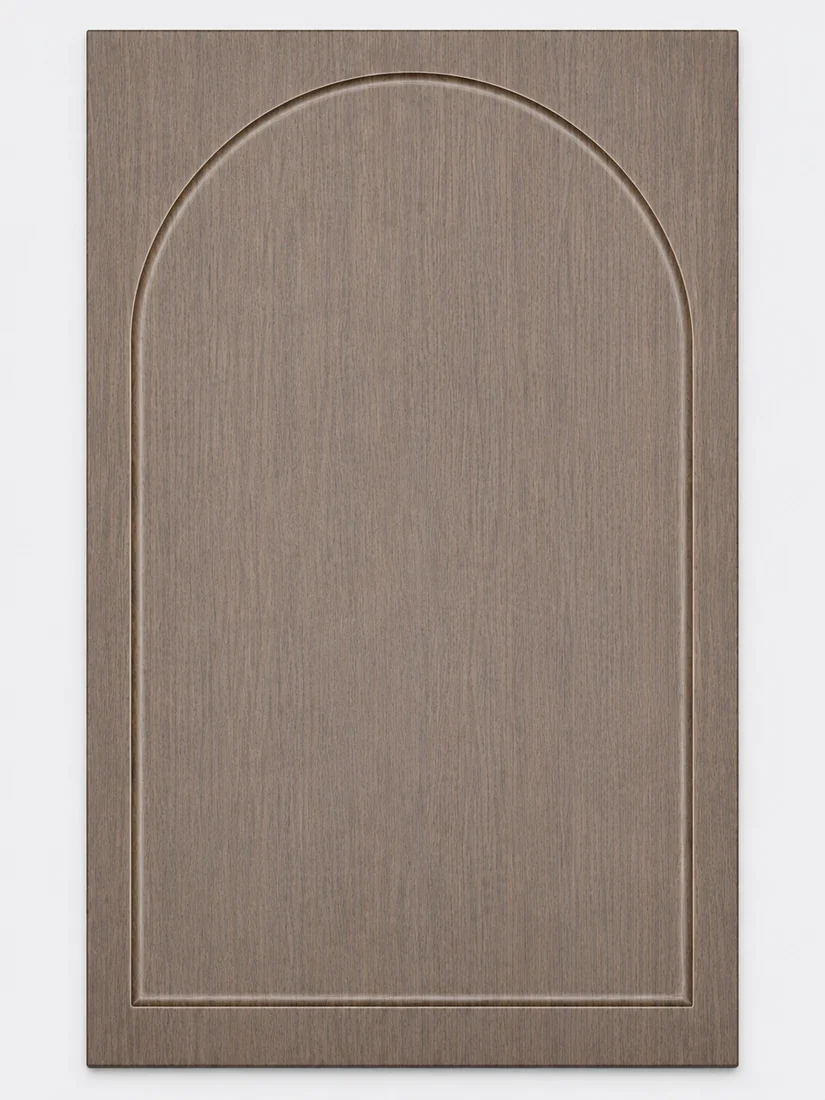
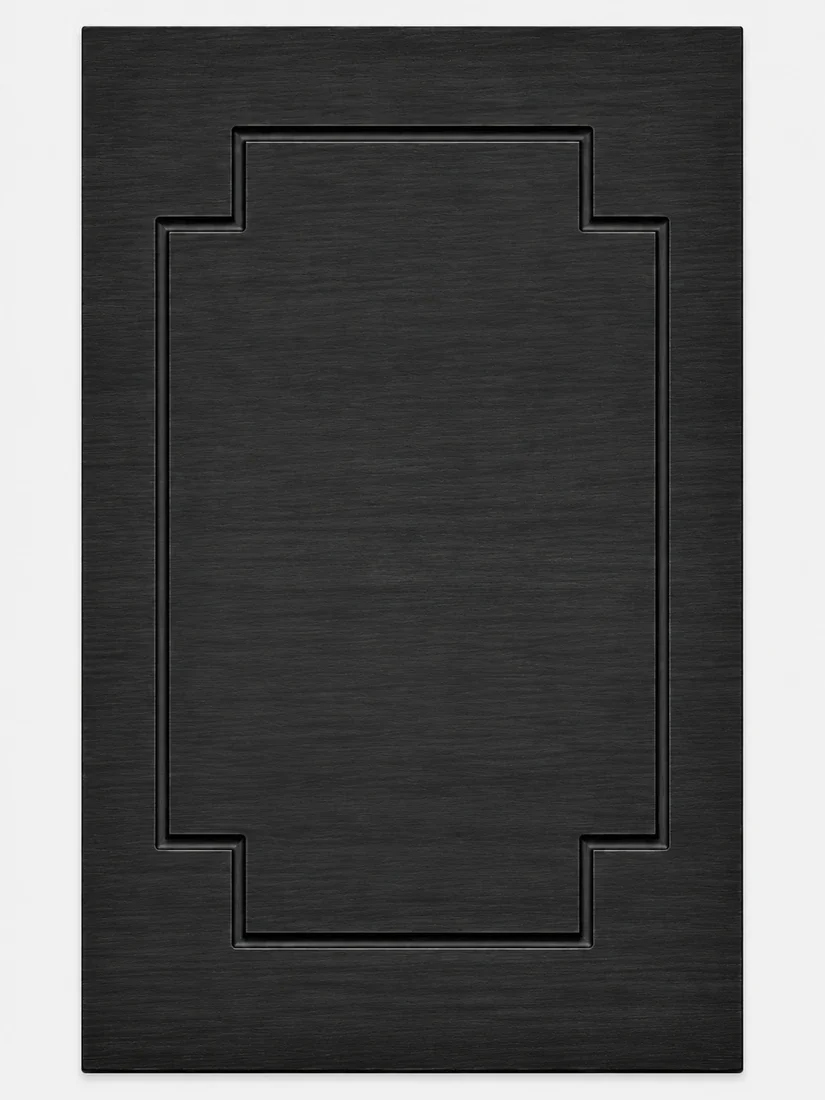
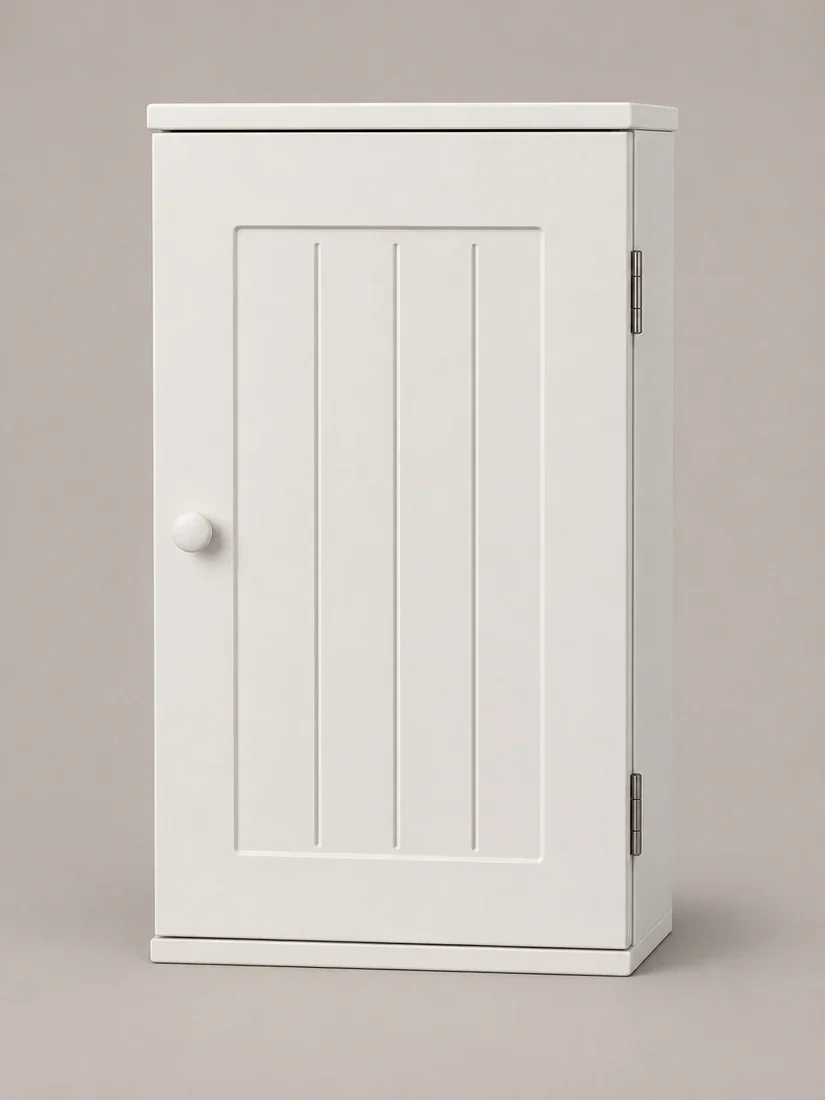
Compare the two arches. Several narrow ridges catch the light on the reddish door, while a single line outlines the grey-brown one. On the finished white cabinet, three straight grooves leave a broad, plain border around the door.
Vertical grooves on tall doors and short drawers
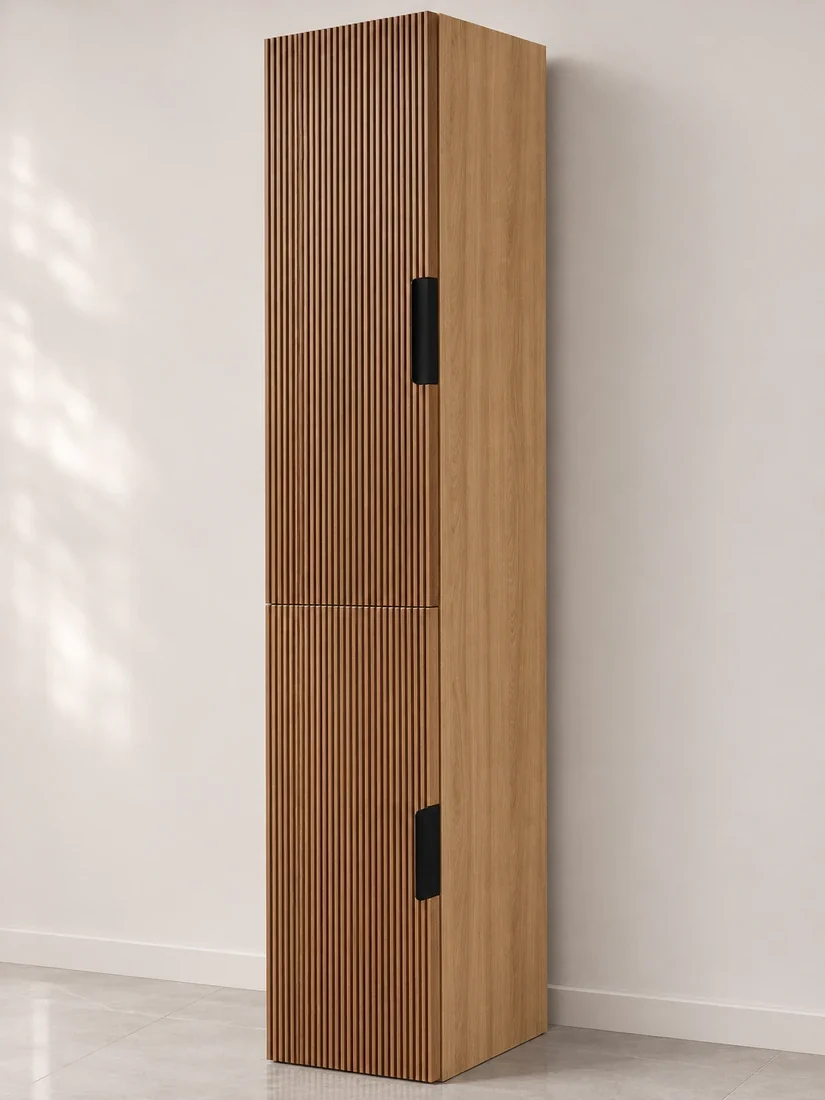
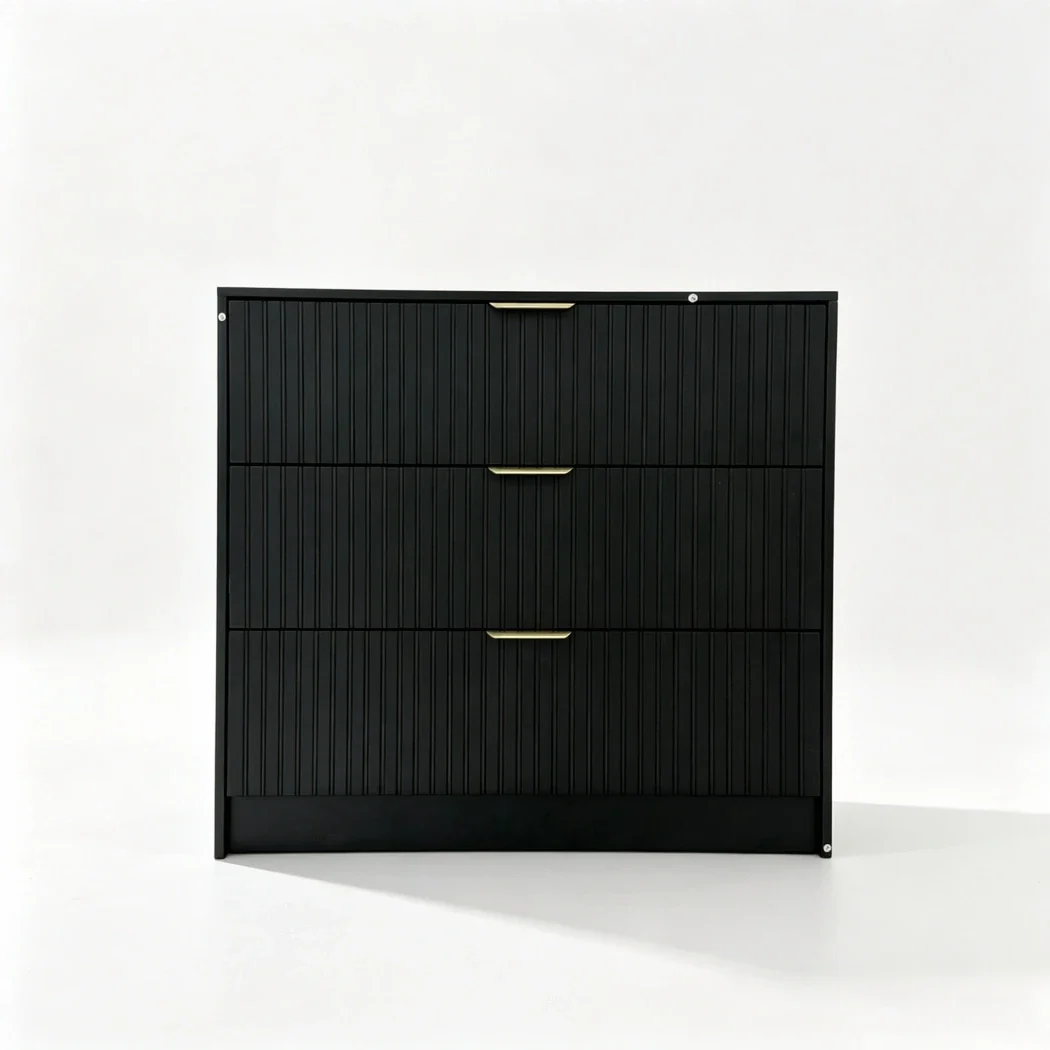
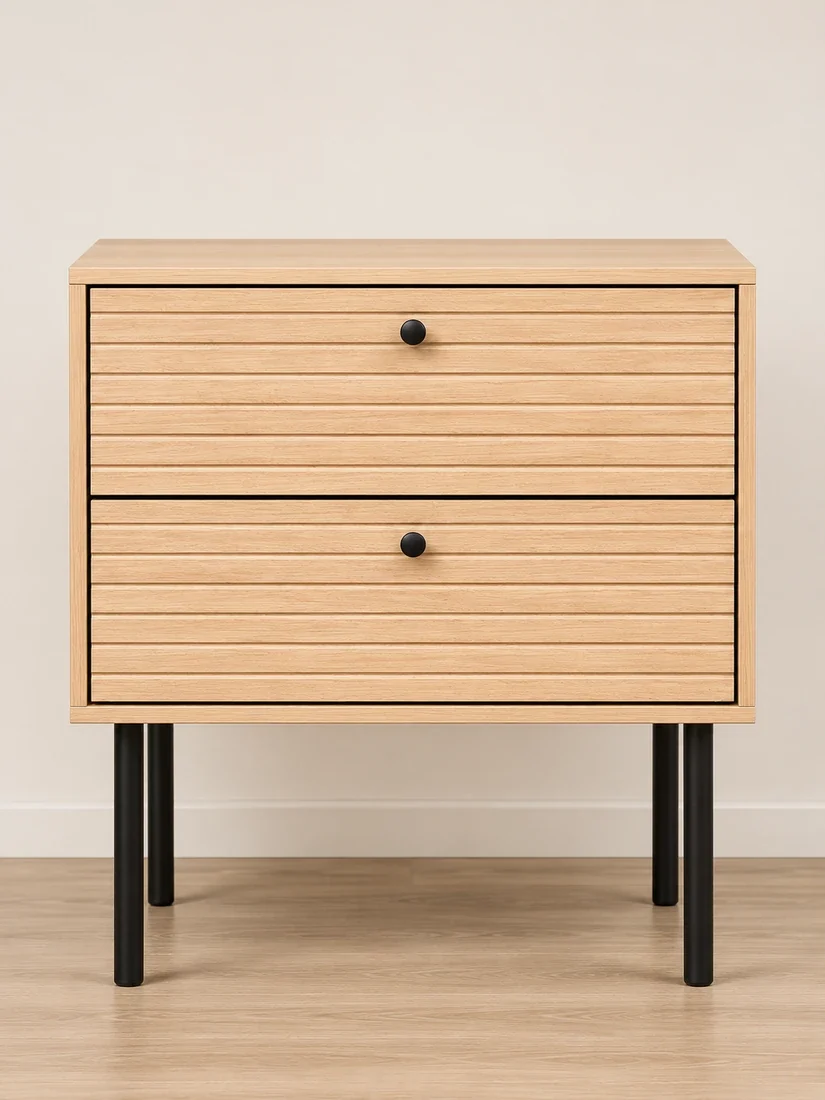
On the tall wood-tone cabinet, your eye follows the grooves down the doors. On the black chest, the grooves run in the same direction across three drawer fronts. If your range includes wardrobes and bedside chests, a shared groove pattern can make the pieces feel like a family.
Horizontal lines on cupboard doors and drawers
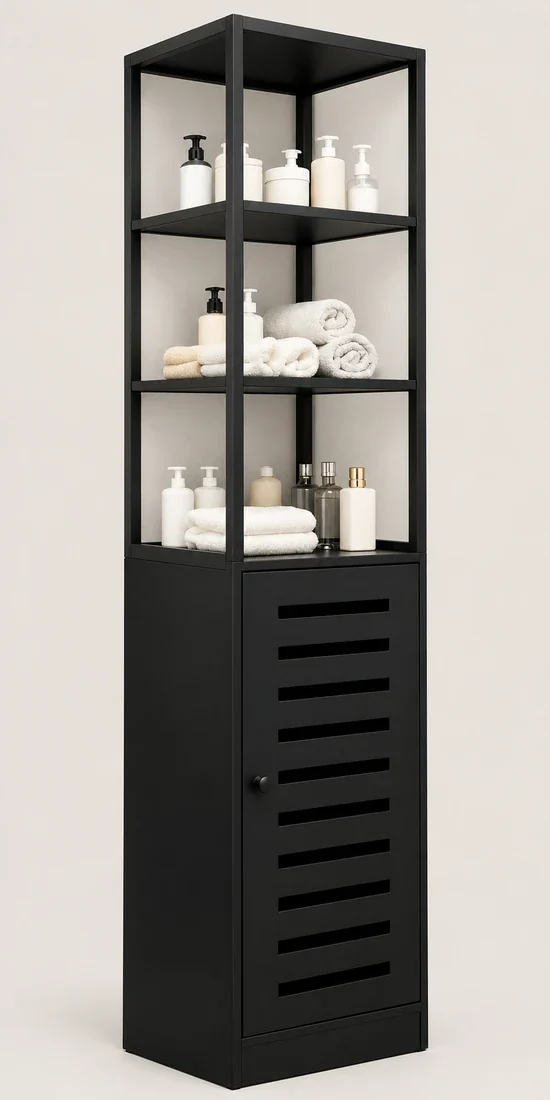
The black shelving unit uses wide slots on just the lower door, leaving the shelves above open. On the low wood-tone cabinet, fine grooves span both drawer fronts. One small section of a tall unit can carry the detail, or it can extend across the entire face of a low piece.
Product focus
Radiator covers that double as display shelves
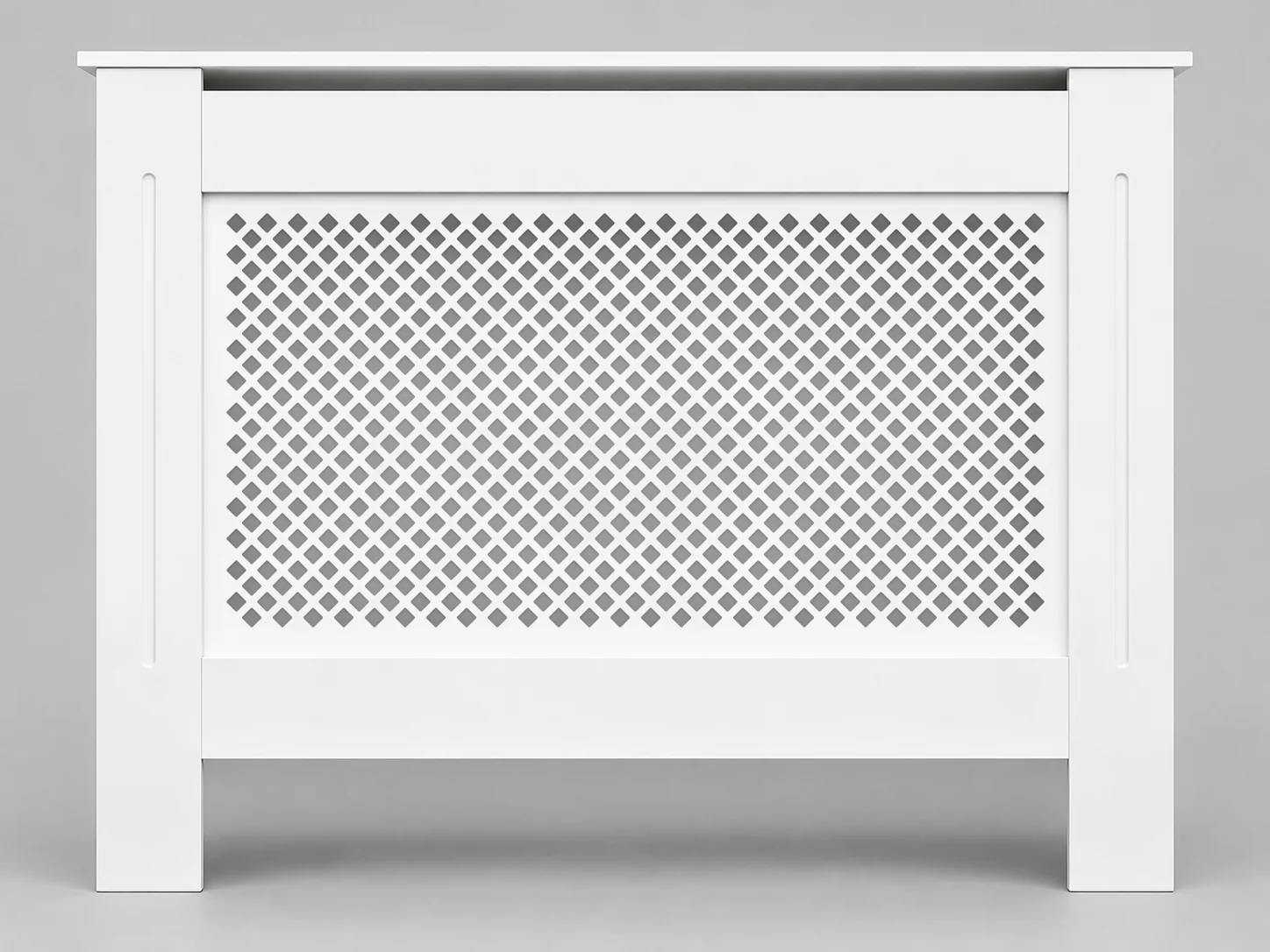
A radiator can take up the stretch of hallway wall where someone would like a narrow console. A radiator cover gives that spot a finished front and a shallow shelf for a small display. In a living room, the same piece can pick up the colour or pattern of the furniture around it.
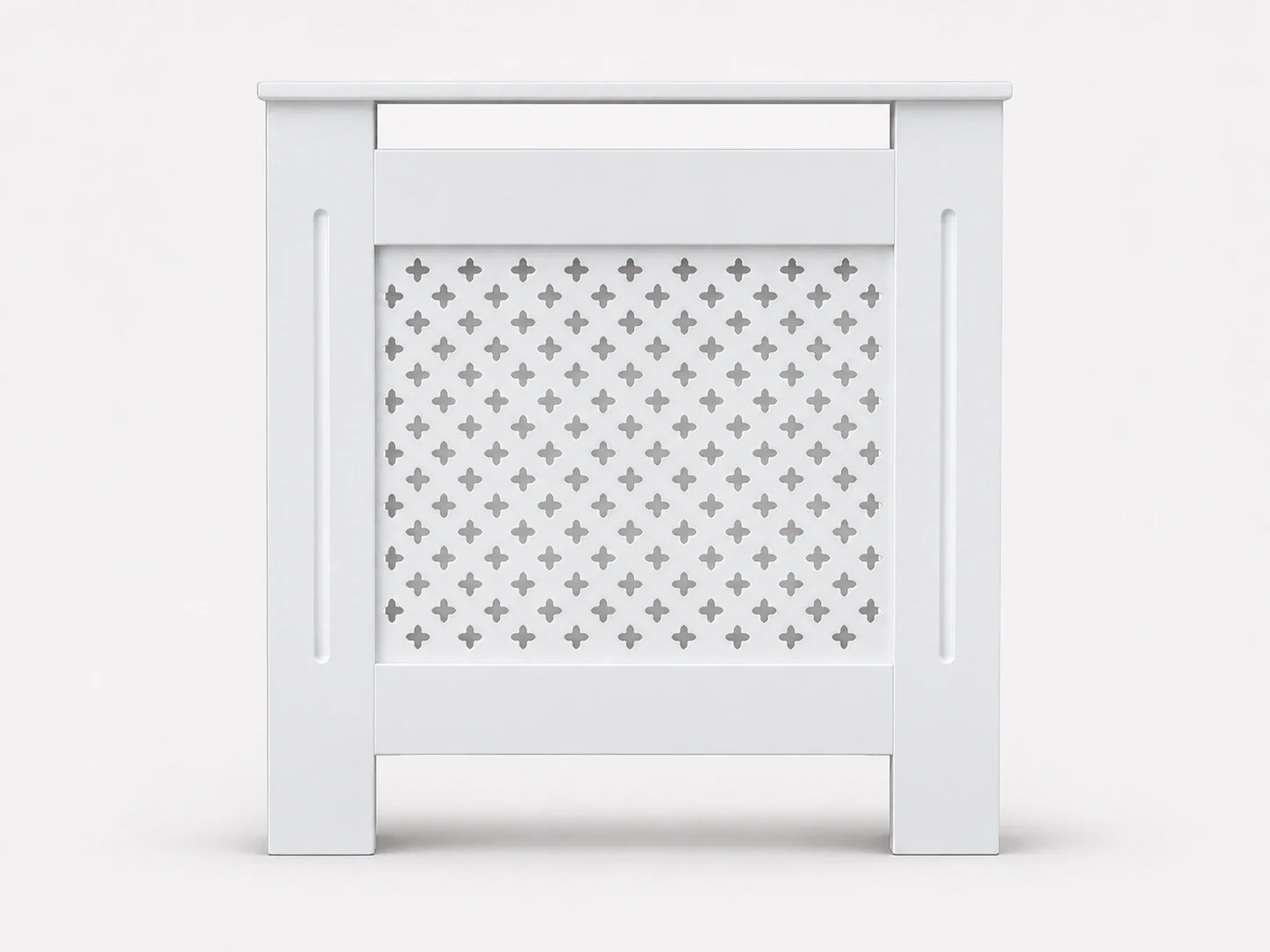
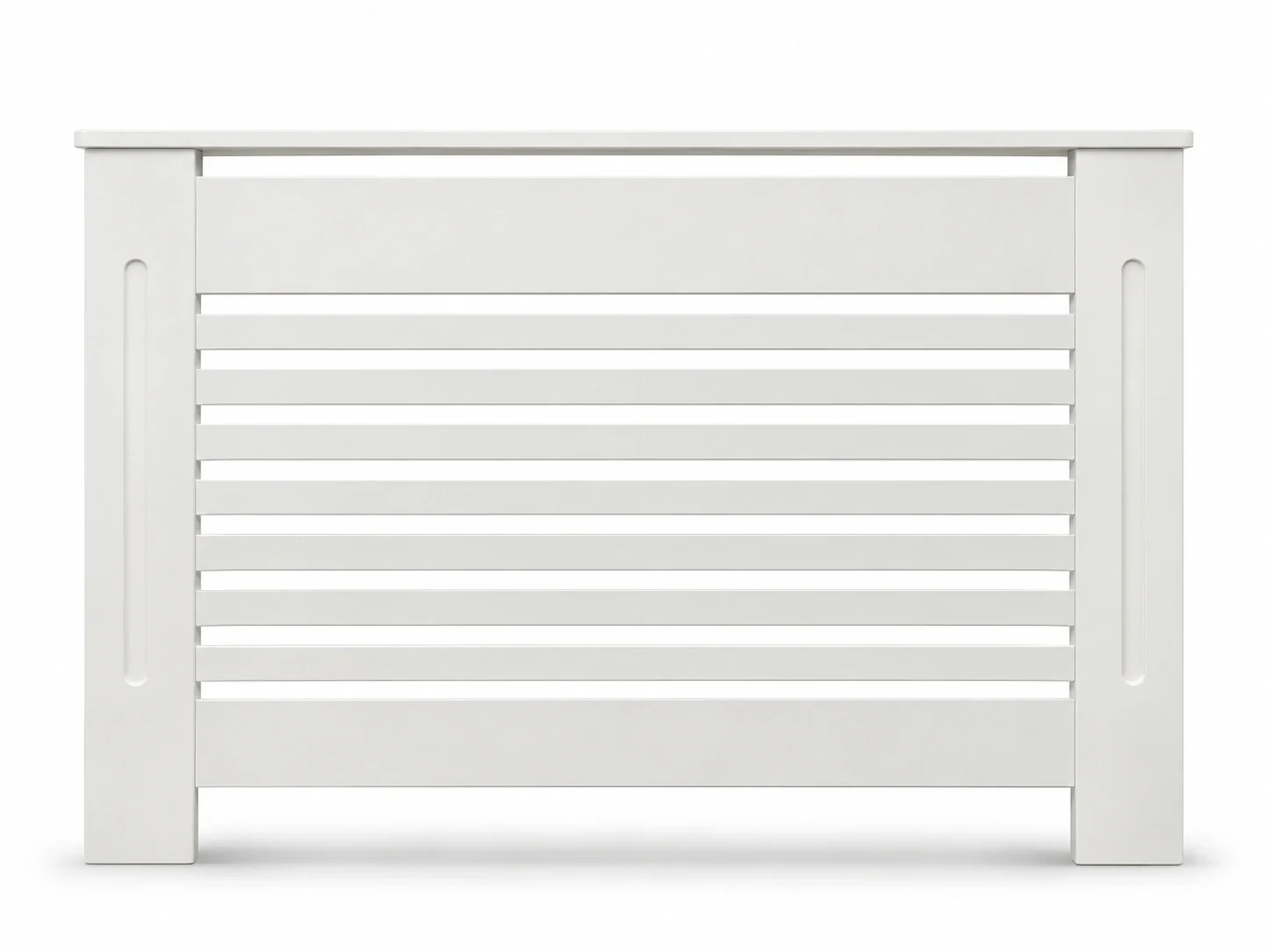
Radiator covers sell particularly well for us with European buyers. All five designs here conceal the radiator from view and have a shelf above. What changes is the face the customer sees every day.
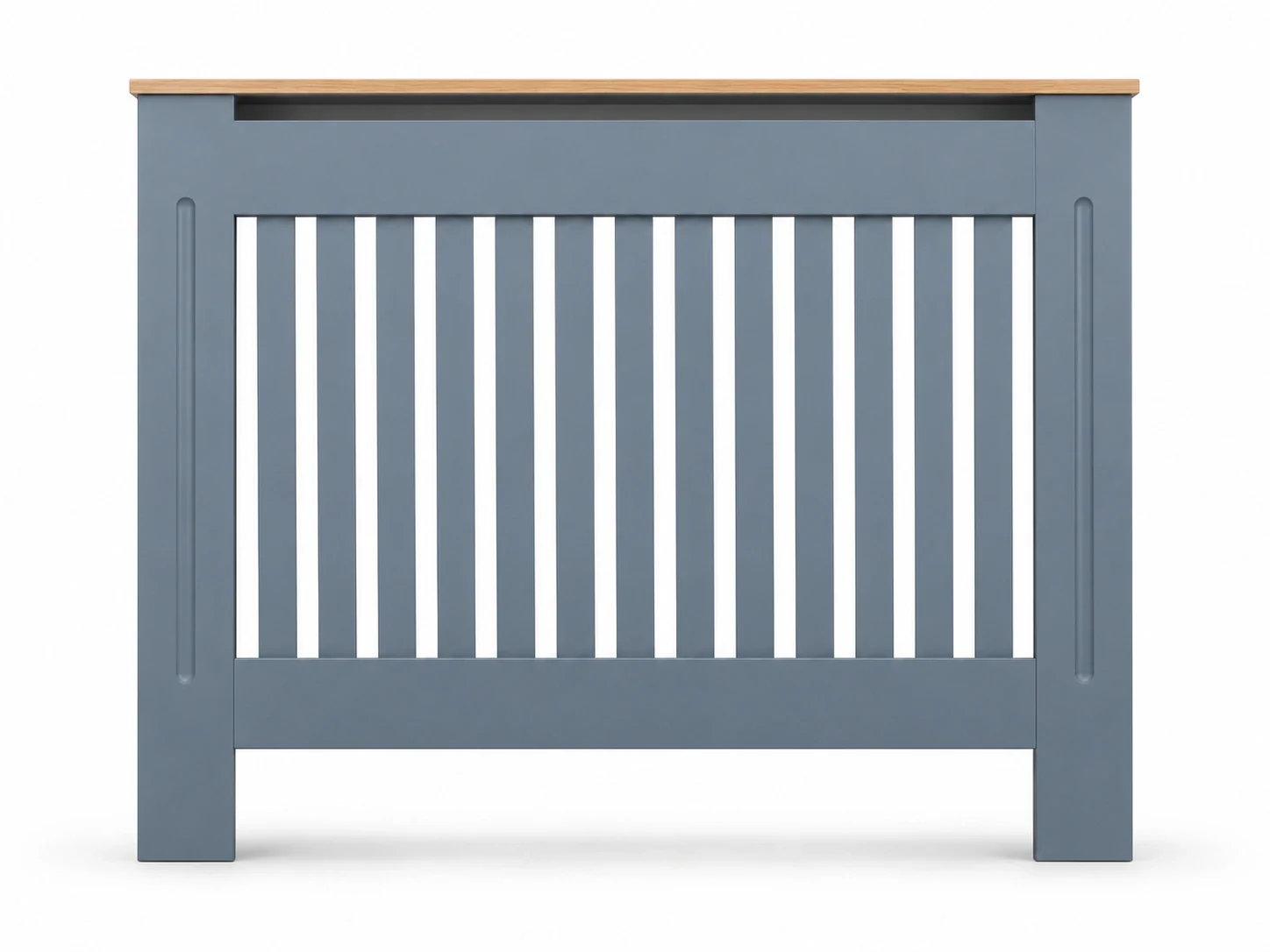
A pattern cut into the front
Long lines across a larger face
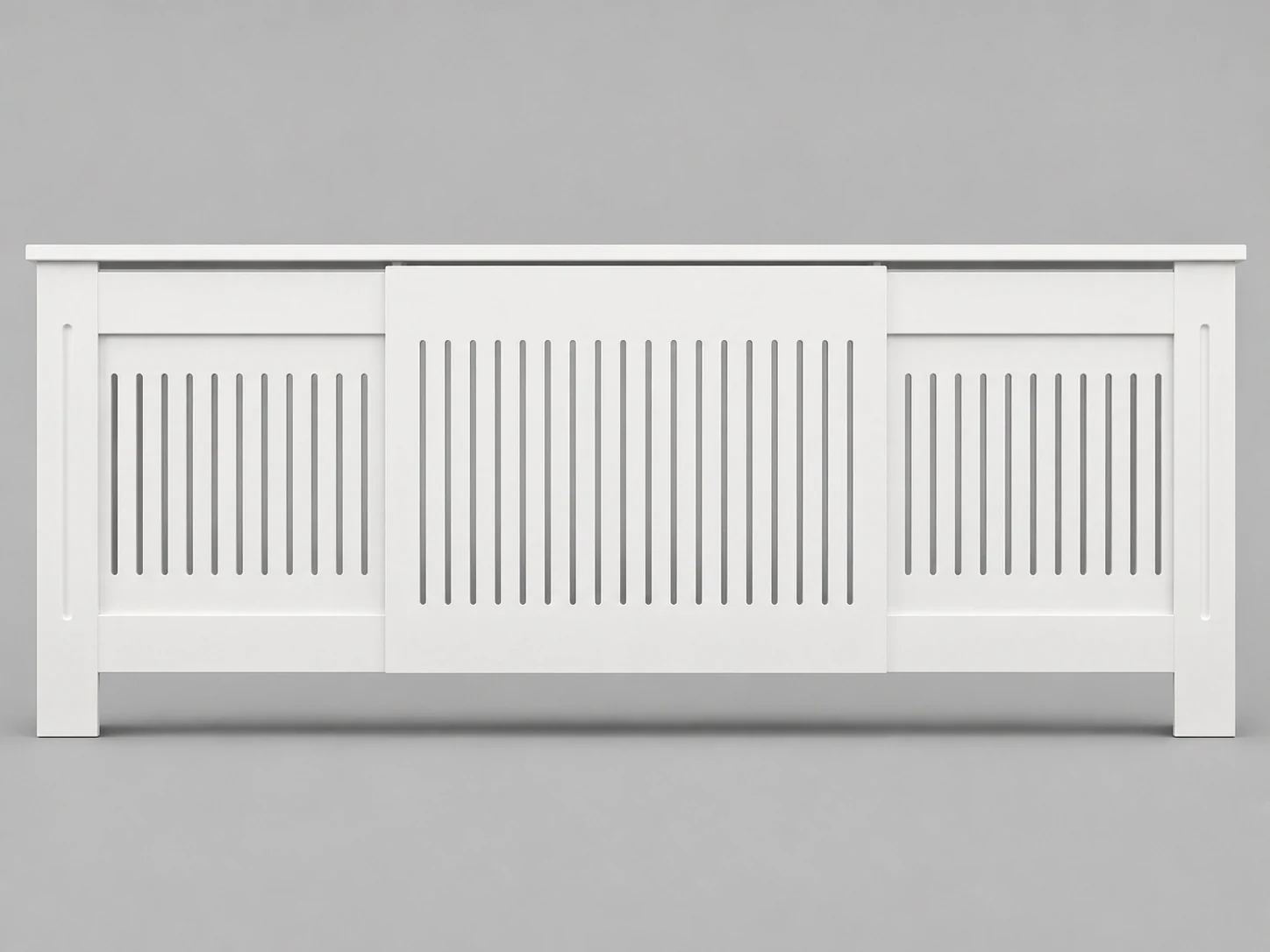
Considering a cover for your range? A photo of the radiator in place is enough to start the discussion. When you have them, its height, width including the valves and depth from the wall will help us review the fit, valve access and clearances for that model.
Direction
Which direction fits your product range?
Start with the role you want the product to play:
If one of these details would suit a piece you already sell, send a photo of the piece and point out the door or drawer you have in mind. A pattern reference is enough to begin the discussion.
Products
Explore carved-panel products
VidooCraft’s Decorative Panels & Screens page shows the available product directions and examples, including wall panels, screens and carved radiator covers.
Explore Decorative Panels & Screens →
For carved cabinet doors or a furniture-front project, send us a product photo, sketch or reference. We can review the product direction and the details that need to be confirmed.
Discuss a product modification
Send a photo, sketch or reference and tell us the role the product should play. We will come back on the direction and the details to confirm.
Planning packaging for an installation project? See our Furniture Packaging Guide →
Looking for furniture product development or wholesale supply? Wholesale & Distribution Partnerships →