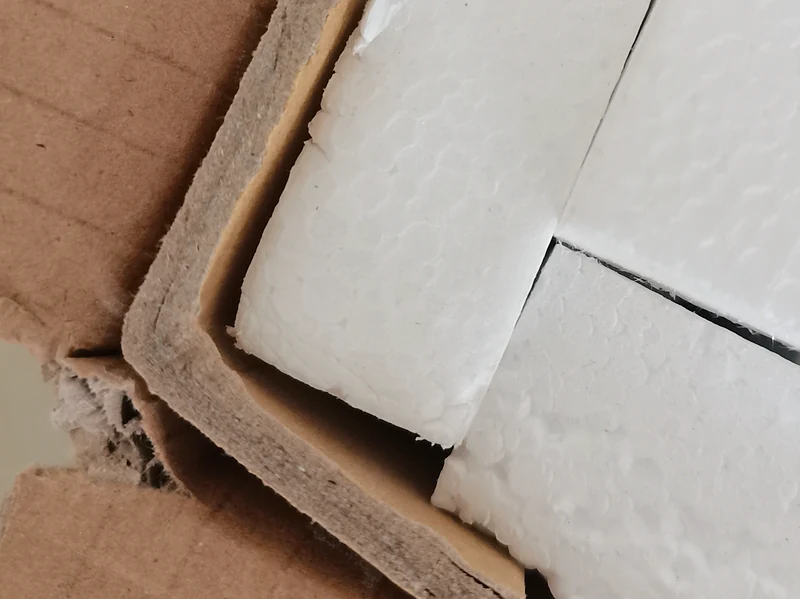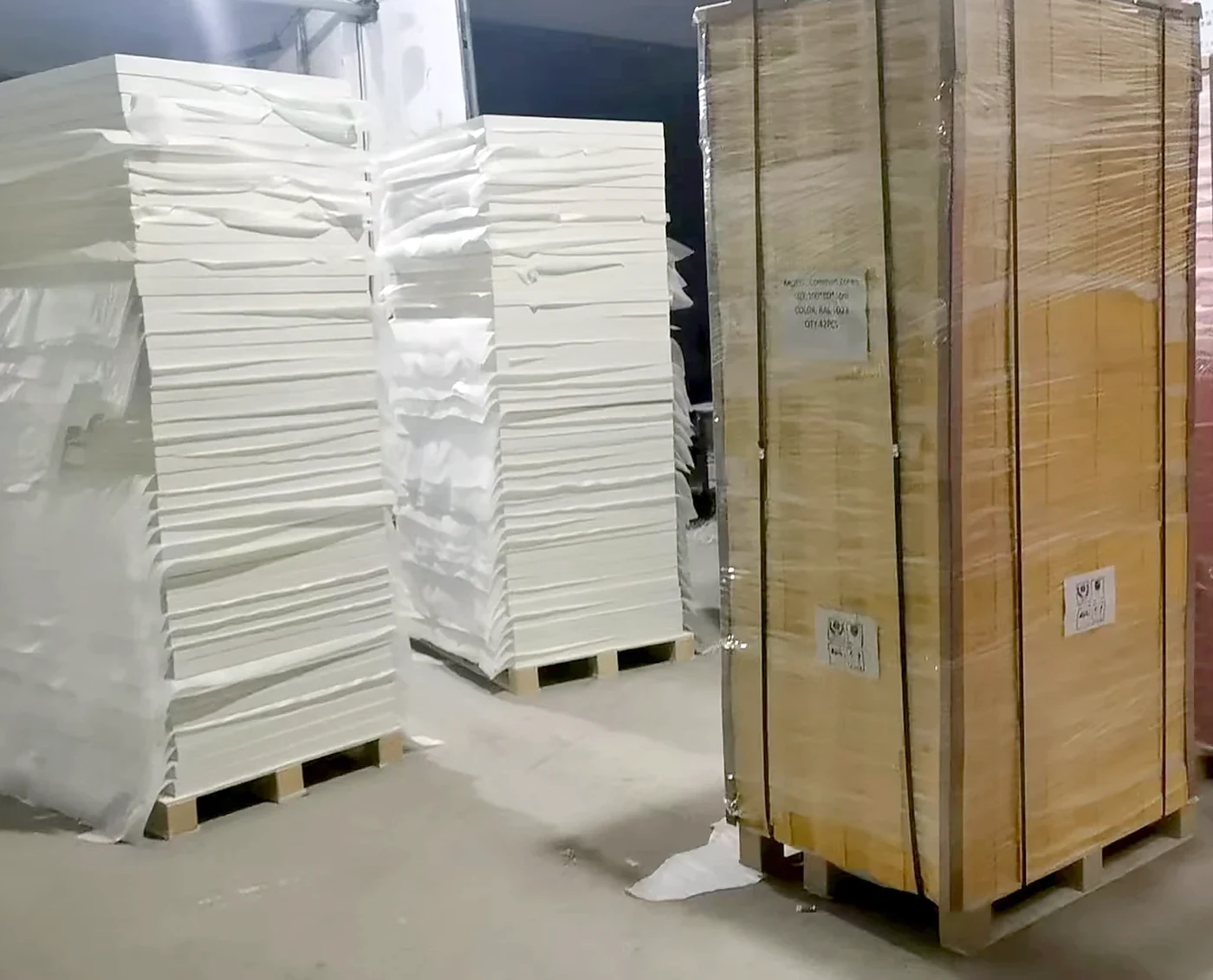
Opened mail-order carton with EPE paper lining and a 5 layer carton

Furniture Packaging That Protects Your Sales and Margin

Furniture Packaging That Protects Your Sales and Margin

Help products arrive ready to sell—without letting carton volume quietly eat into profit.

Damage claims. Replacement costs. Negative reviews.Oversized cartons eating into your margin.

You chose a product because you believe customers will buy it. You don’t need to know the packaging specifications. Tell us how you sell and where it will be delivered—we can review suitable options with you.

For online sales

One damaged order can become a return, a replacement and a negative review.

An oversized carton can take margin from every shipment.

For online orders, the packaging is chosen around the parcel journey: enough protection for the product, without paying for empty space.
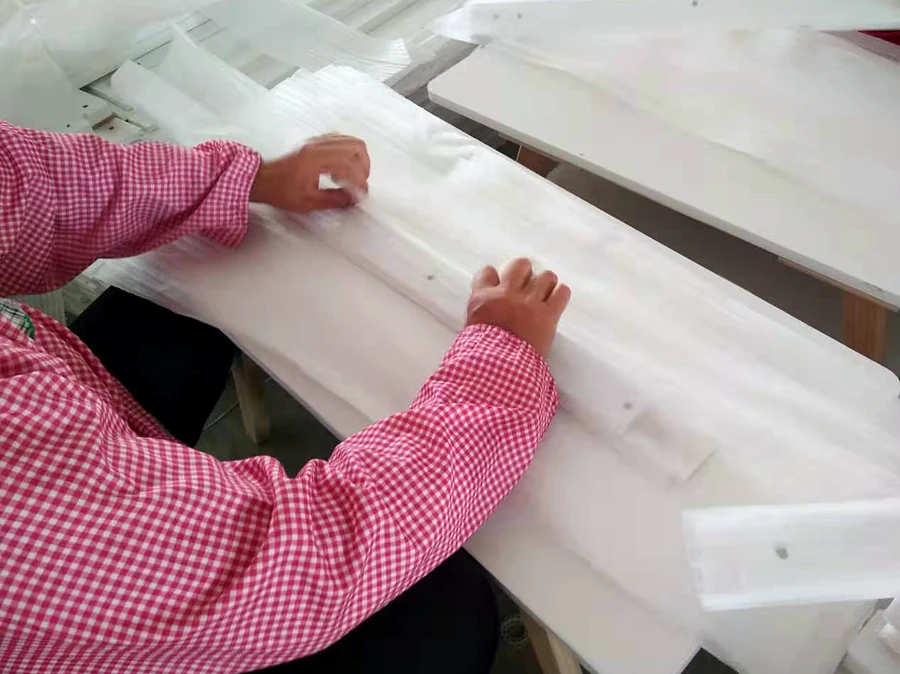
Worker wrapping a furniture panel with EPE foam film
EPE foam wrapHelps prevent scratches on visible surfaces.
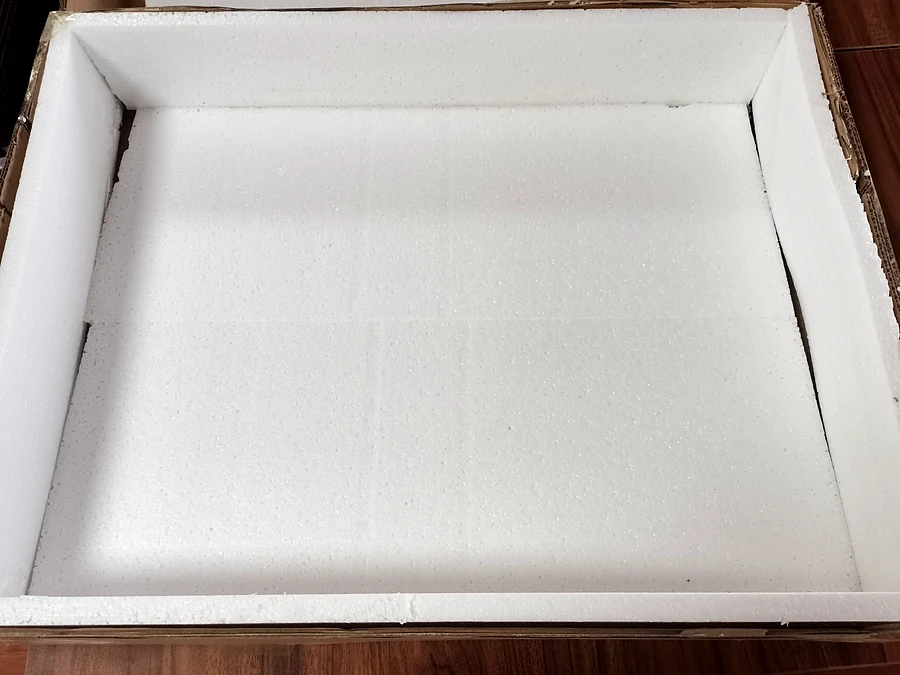
Mail-order carton lined with foam boards on all six sides
Foam boards on all six sides.Thickness is selected based on product weight and package size.
Paper corner protector fitted between a carton and foam-packed furniture
Paper corner protectorsHelp protect the product corners from impact.
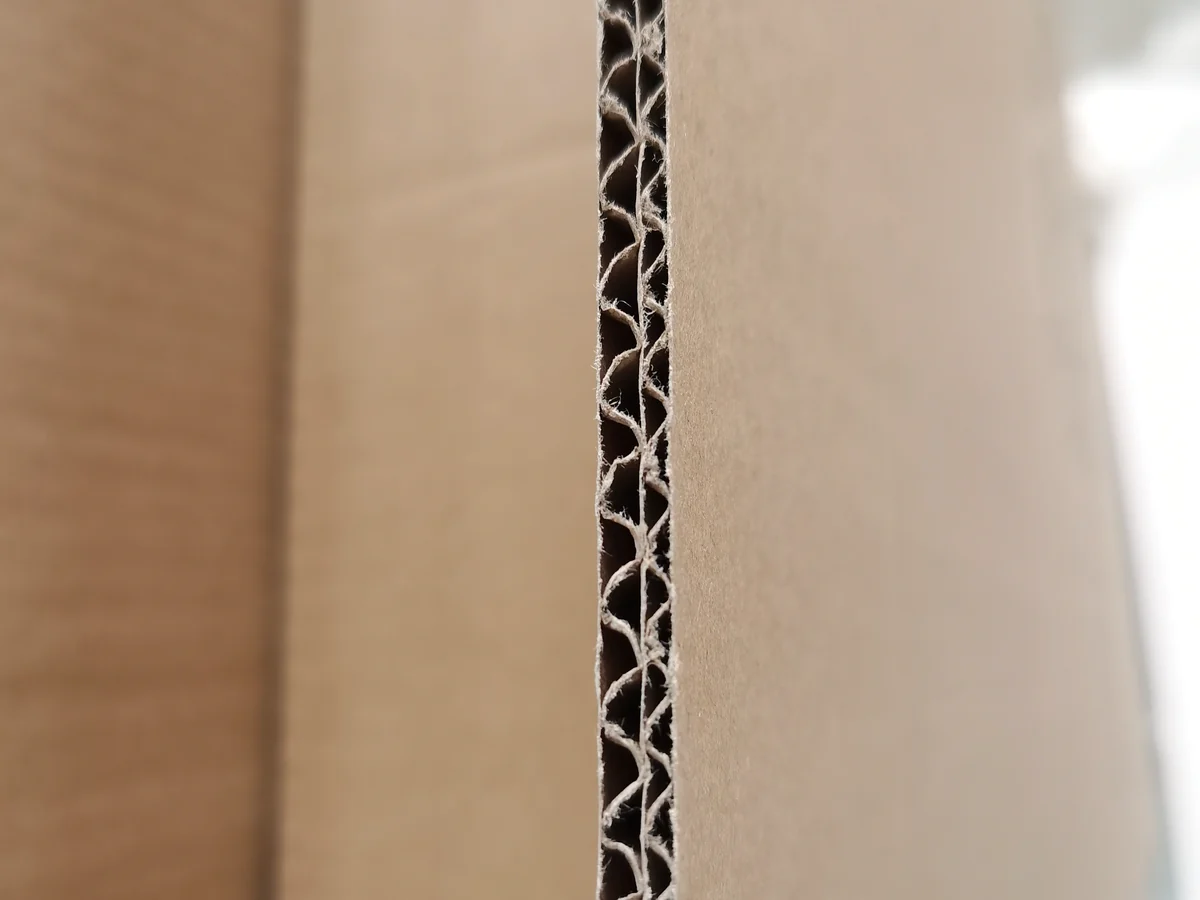
Cross-section of a five-layer corrugated carton
Five-layer carton.Adds an outer layer of protection during transport.

You don’t need to choose the foam thickness. We consider product weight, protection needs, carton size, transport cost and damage-related returns together. For lighter products, 1.5 cm foam boards may be suitable; heavier products may need 2 cm or thicker. These are examples, not one standard for every item.

LENGTHHEIGHTWIDTH

CBM = L × W × H (in metres)

Carton dimensions can affect shipping charges on some parcel services and the space available in a container. You don’t need to calculate this alone.
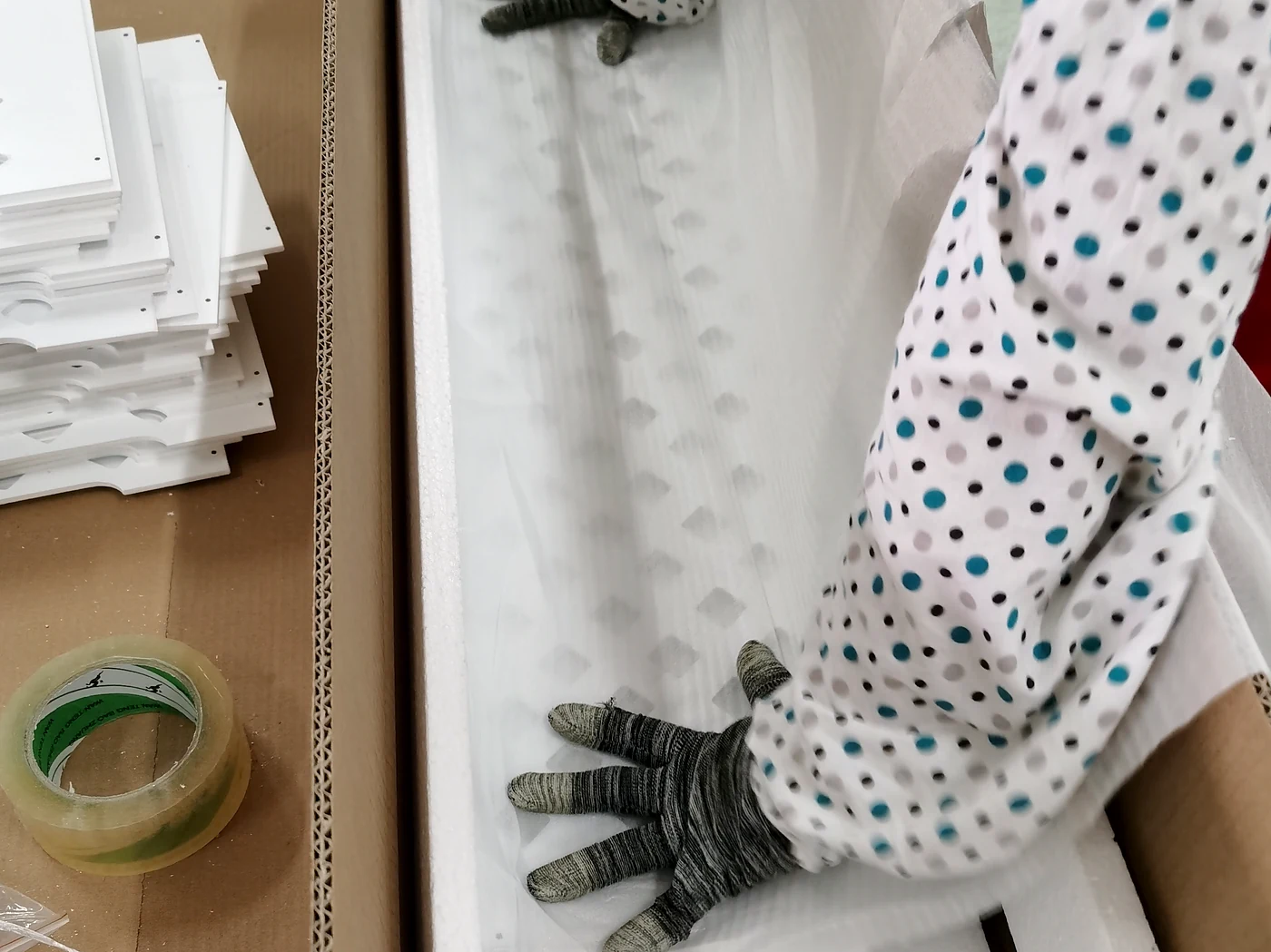
Opened mail-order carton with EPE paper lining and a 5 layer carton
An opened mail-order carton: EPE paper to protect the surface, foam boards around the product, and 5 layer carton outside.

For offline retail

Want stronger shelf presentation? Choose full-color printing. Need to control packaging cost? Choose a brown carton with a color label.
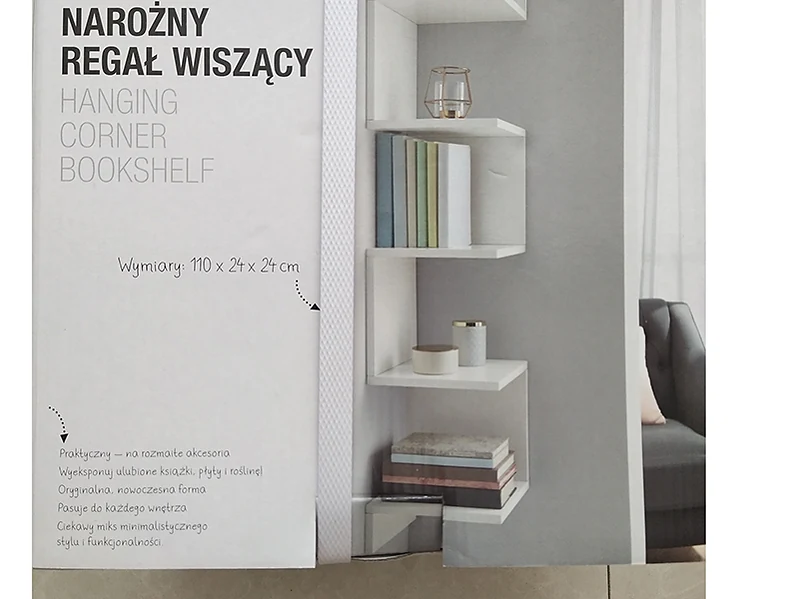
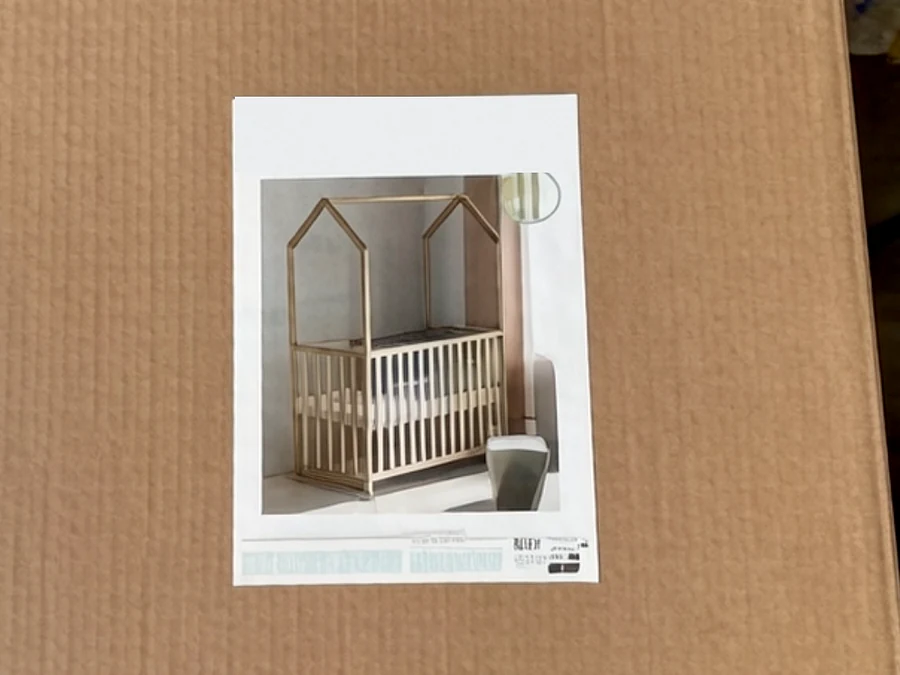
White retail box printed with a full-colour product image
White box + full-color printingA stronger printed presentation; higher packaging cost.
Brown carton with a printed colour product label
Brown carton + color labelA more economical option for product or brand information.

A standard carton is for wrapping and basic protection; it should not automatically be treated as mail-order packaging.

For projects and installation teams

Unload the protected pallet, move it to the work area, and get started with installation.
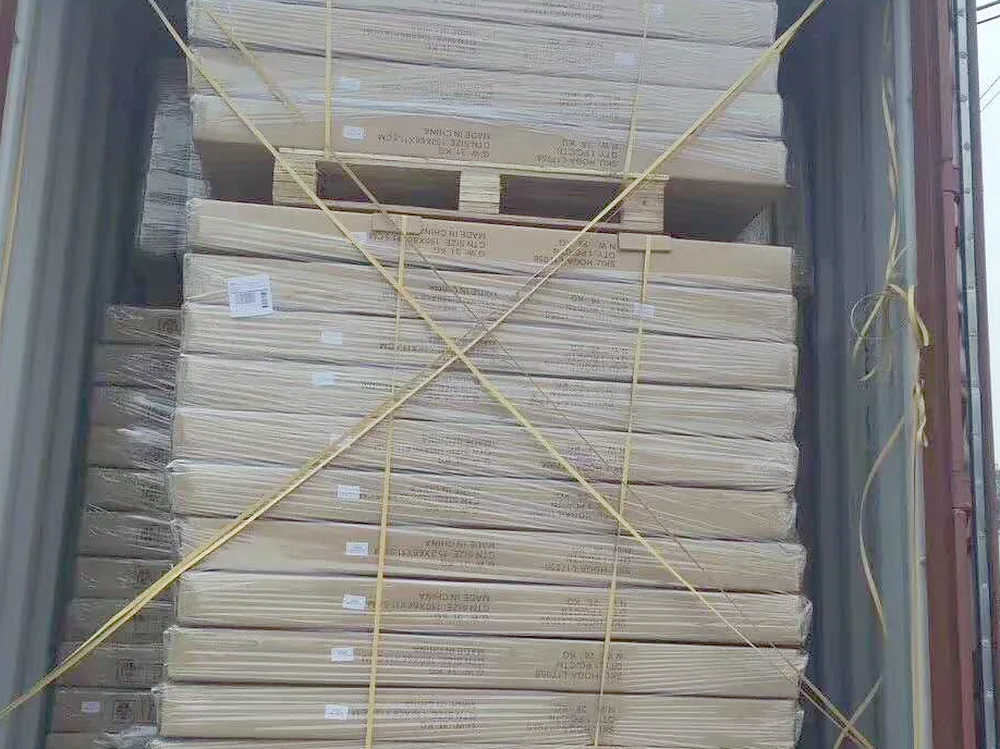
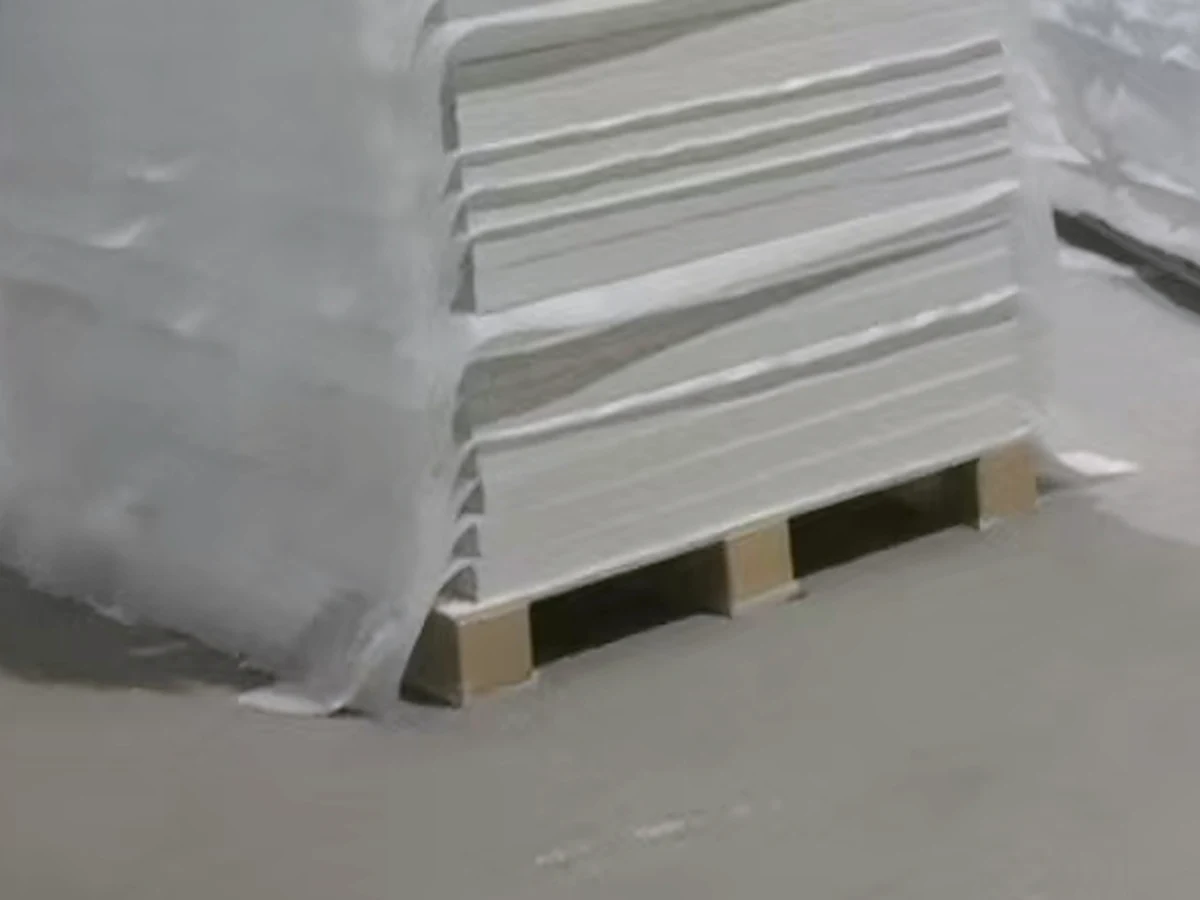
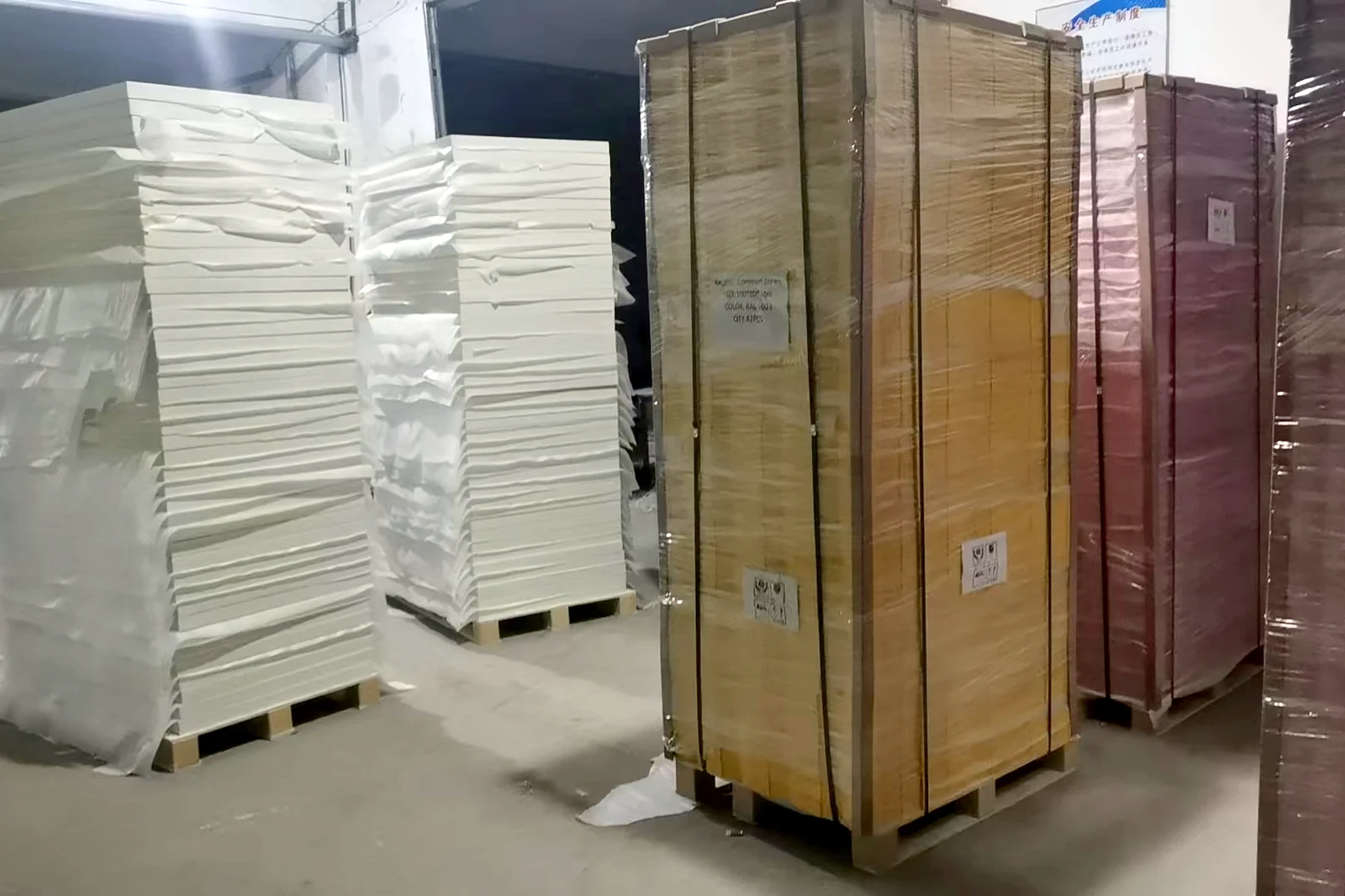
Palletised furniture loads secured inside a container before shipping
Custom flat plywood palletA stable base that makes unloading and moving easier.
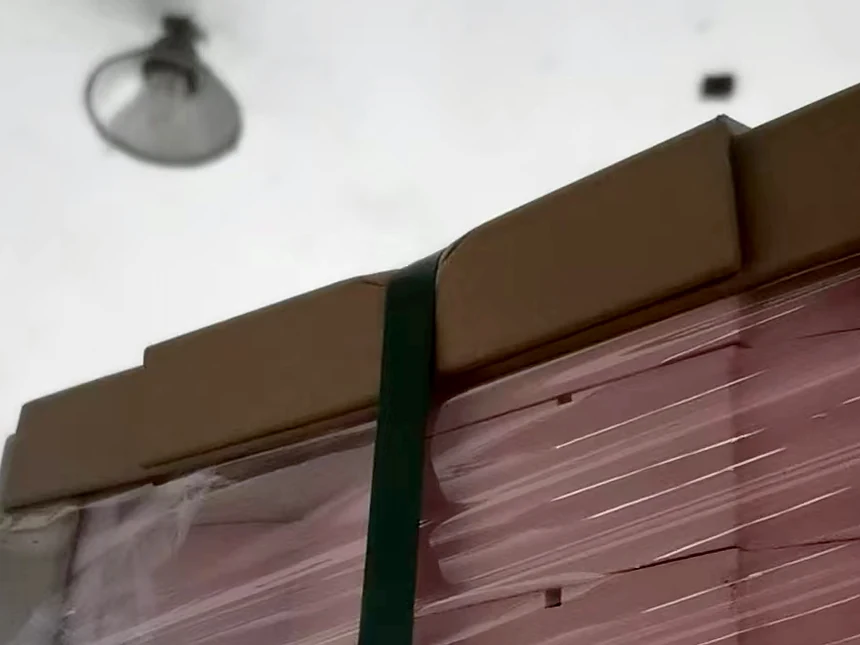
Cardboard corner protector on a film-wrapped pallet load
Paper corner protectorsHelp keep carton corners in good condition during handling.
Stretch wrap around stacked goods on a pallet
Stretch wrapHolds the goods together and helps keep the load clean.
Plastic strapping over stretch film on a pallet load
StrapsKeep the load secure on the pallet for safer transport.
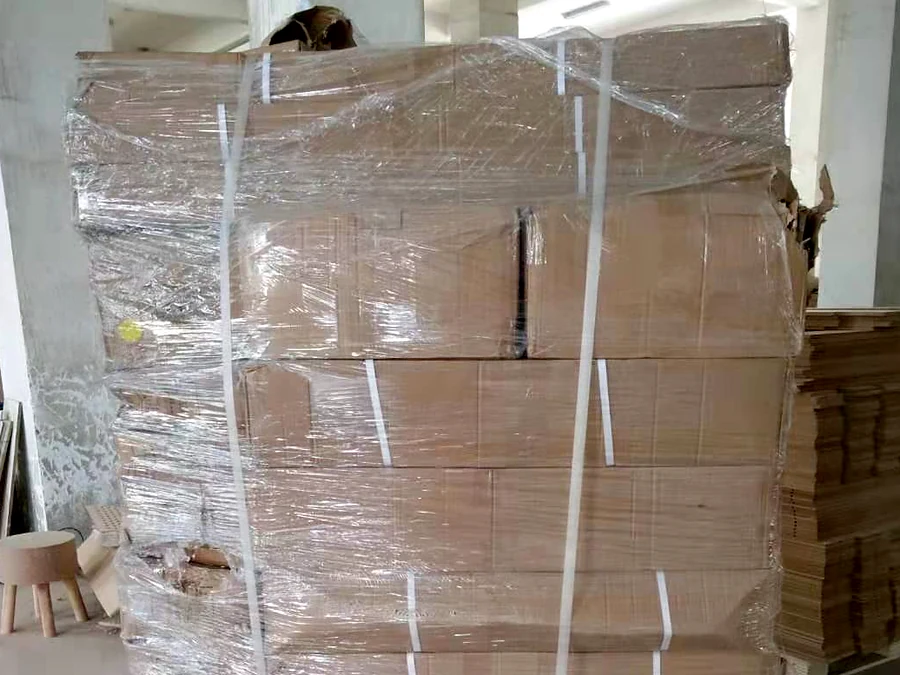
Cartons secured on a flat pallet for container loading
Completed pallet loadCartons secured on a flat pallet for shipment.

Custom pallet packaging keeps the load together for easier unloading and site handling. Pallet dimensions are made to suit the product and planned container loading arrangement, balancing product protection with efficient space use.

VidooCraft generally uses multi-ply plywood pallets instead of raw solid-wood pallets. Raw-wood packaging may require ISPM 15 treatment and marking for international trade; the accepted treatment is not always fumigation. Plywood made from processed wood is generally exempt, but destination requirements should be confirmed.

Official references: IPPC — Regulation of wood packaging material in international trade · European Commission — requirements for wood packaging and dunnage

Container capacity (cartons in practice)

20-foot standard dry container: about 25–28 CBM of cartons

40-foot high-cube dry container: about 62–69 CBM of cartons

These are the volumes we usually load with cartons, not the container’s theoretical capacity. Actual loading depends on carton shape, safe stacking, pallet use, loading layout and weight limits.

Send us a product photo, drawing or link and tell us how you sell. If you are unsure about packaging, we can review it with you.

Discuss packaging for your product

Related links

Does My Furniture Shipment Need Fumigation?

Furniture Shipping Guide

Does My Furniture Shipment Need Fumigation?

A practical buyer’s guide to checking fumigation requirements, asking your supplier to arrange the process, and avoiding unnecessary solid-wood pallet costs.

VidooCraft Export Team · Updated 19 November 2026 · 6 min read
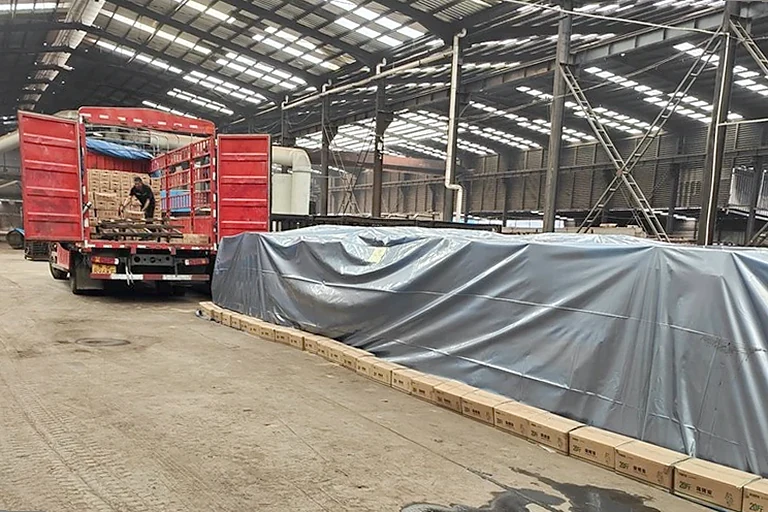
Furniture cartons sealed under a fumigation tent at a factory before container loading
Fumigation tent over packed furniture in the factory yard, before container loading.
Start with your destination

Not sure whether your order needs fumigation?

Based on furniture export experience, shipments to the following destinations commonly require fumigation before loading:

  • United States
  • Australia
  • New Zealand
  • India
  • Canada

If your destination is listed, ask your supplier to confirm the requirement and arrange fumigation before the goods are loaded. If your supplier is unsure, use the message below to ask them to check.

This is a practical guide based on our furniture export experience. Rules can change, so your importer or customs broker should confirm the current requirement for your destination.

What your supplier should handle

You should not need to contact customs or prepare fumigation documents yourself. When fumigation is required, the factory should arrange the customs visit, handle the treatment and prepare the documents. The buyer covers the confirmed fumigation charge.

If your supplier is unsure

Ask the factory to confirm before loading

You do not need to contact customs yourself. Ask the supplier to confirm the destination requirement, arrange the customs visit if needed, prepare the documents, and tell you the cost and timing before loading.

What your factory should handle

Ask the supplier to manage the process

  • Confirm whether the destination requires fumigation before loading
  • Invite customs and arrange the fumigation at the factory
  • Prepare the fumigation documents and share them with you
  • Confirm the charge and loading schedule with you

As the buyer, you share the destination and approve the fumigation charge.

Copy and send to your supplier

“Please confirm whether this furniture shipment to [destination] requires fumigation. If it does, please arrange the customs visit and fumigation at your factory, and prepare the required documents. Please confirm the cost and timing before loading. After fumigation is completed, please send me the fumigation certificate.”

A simple way to check that the factory knows what to arrange.

Typical factory process

What happens before the container is loaded

When fumigation is required, the factory coordinates the process around the cargo and the shipping schedule.

1

Confirm the destination and loading date

The buyer tells the factory the shipment destination and the target loading date.

2

The factory arranges fumigation

When fumigation is required, the factory applies for and arranges a customs visit to the factory. The buyer does not need to organize the treatment.

3

The factory prepares the documents

The factory obtains and prepares the fumigation documents for the shipment, then shares them with the buyer.

4

The factory sends the certificate

After fumigation is completed, the factory sends the fumigation certificate to the buyer.

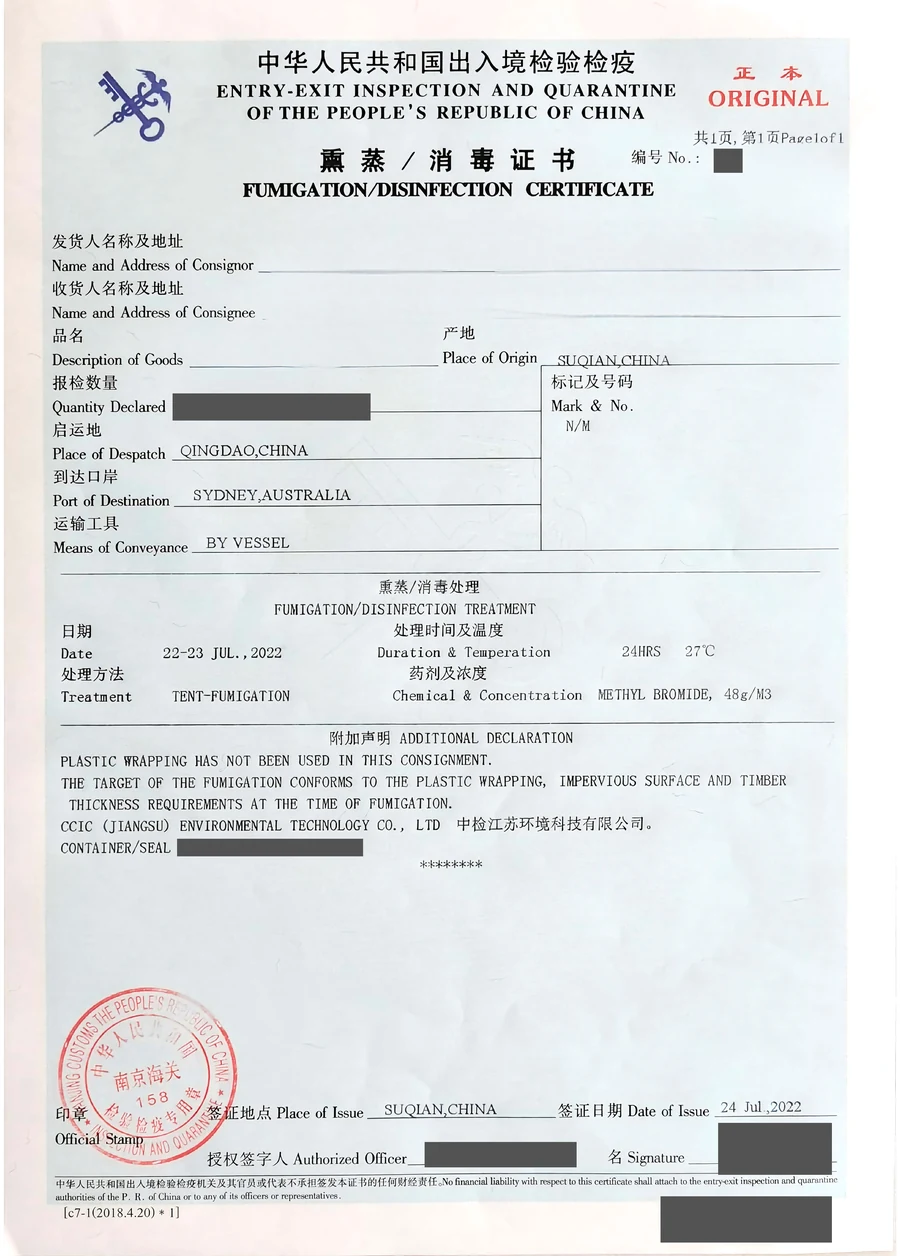
What does the fumigation certificate look like?

After fumigation is completed, the factory prepares and sends the fumigation certificate to the buyer. The example below shows the type of document you may receive; the details can vary by shipment.

View certificate example →

Example of a fumigation certificate issued after treatment
Sample certificate — details vary by shipment
Typical fumigation cost

USD 200–300

For shipments up to 20 CBM

Each additional CBM is about USD 3–4. This is a reference cost; the final charge is confirmed for the actual shipment volume before processing.

Typical timing

3–5 days

Usual scheduling window before container loading

Customs typically visits about 1–2 days after the application, fumigation takes about 24–48 hours, and documents are usually provided within a few days after treatment.

These are typical timings, not guaranteed lead times. Actual timing depends on the shipment, the local customs schedule and the treatment result.

A separate packaging detail

Choose multi-layer engineered-board pallets instead of solid wood

Furniture packed on custom multi-layer engineered-board pallets, film-wrapped in the workshop
Furniture packed on custom multi-layer board pallets in the workshop.

Recommendation: choose a multi-layer board pallet

For furniture shipments, choose a custom multi-layer engineered-board pallet rather than a solid-wood pallet. It can be made to fit the furniture and the container loading plan, and it avoids the extra treatment cost that can come with solid wood.

Solid-wood pallets may need separate fumigation or heat treatment, and that adds cost and time to the shipment. For most furniture orders there is usually no need to choose solid wood when a suitable multi-layer board pallet can do the job.

VidooCraft makes its pallets from multi-layer board and customizes them to the products and the loading plan. It is one example of the packaging choice, not a step in the fumigation process itself.

Fumigation of the shipment and treatment of solid-wood packaging are two different things

The destination list above is about fumigating the furniture shipment itself. Solid-wood pallets, crates and other solid-wood packaging are regulated separately as packaging material (ISPM 15) and may need their own heat treatment or fumigation with a separate mark. Multi-layer board, plywood and engineered panels are not treated as solid-wood packaging, which is one reason they simplify shipping.

Need a clear answer for your shipment?

Before loading, confirm the destination requirement, fumigation charge and document timing with your supplier. If the factory is unsure, raise the question early.

Ask us about your shipment  →


Related guide
Choosing Furniture Packaging for Online, Retail and Project Orders
Read the guide →